Island Updates

Casco Bay High School Service Learning

This past winter, Casco Bay High School seniors Neil, Clare, and Lizzy collaborated with Hurricane Island Foundation to design and lead a four-day expedition on Hurricane during late spring for sixteen of their fellow high school peers and two chaperones. The expedition was called, “How To Be Comfortable Being Uncomfortable In the Outdoors,” and focused on bringing young people together through time spent in the outdoors. The idea came about for their senior project, a great example of how Casco Bay High School’s model as an Expeditionary Learning Mentor School encourages students to engage and take the lead with their learning.

Despite chilly temperatures and a morning waking up to snow, students fully engaged with their surroundings on Hurricane. Neil, Clare, and Lizzy did a great job at creating and leading daily lessons, which included leadership exercises, hiking and exploring the island, learning about Hurricane Island’s history, teaching and implementing Leave No Trace practices, and a two-hour reflective solo.

They also incorporated an element of service learning into their time on Hurricane. Every morning students helped Hurricane staff with various projects around the island including landscaping, building repairs and cleaning, and brush clearing, which proved to be a tremendous help.

During the students’ final night on Hurricane, Neil, Clare, and Lizzy led a reflection circle, prompting students to think about their time on Hurricane, how it was impactful, and what lessons from their experience they hoped to translate into their life back home. Reflections resonated around how grateful they were for the relationships they made with their peers in thanks to the close and connected community that Hurricane Island’s environment encourages. Casco Bay High School’s experience was a great example of how Hurricane Island can be used as a site for implementing tremendous leadership skills and making close connections with your fellow island peers. 

Subscribe in a reader

One Step Closer to Summer

We are excited to have finalized the team out on Hurricane Island for this summer! Chloe and Collin will be joining the rest of the Hurricane Island staff in late June, as our science education and research interns. Both Collin and Chloe will be working on their own independent research project in addition to helping instruct our ISLE and SEAL programs, so stay tuned for updates about their research on our science blog!

Collin Li, University of Miami

Collin Li, University of Miami

Chloe Tremper, University of Vermont

Chloe Tremper, University of Vermont

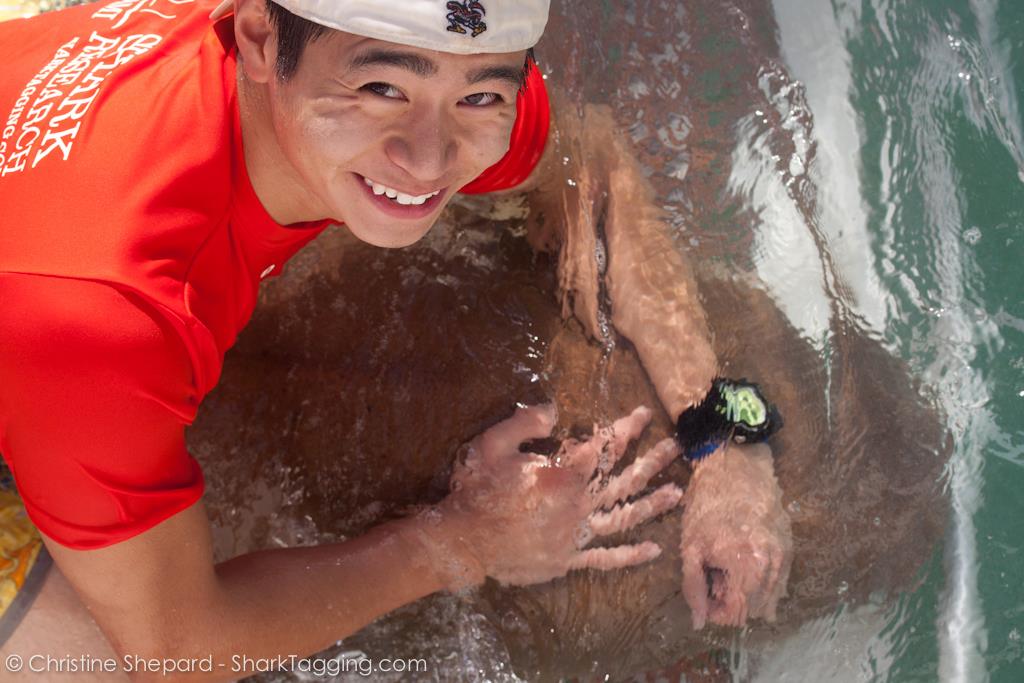
Originally from Flushing, New York, Collin is currently a Junior studying Marine Biology at the University of Miami in Miami, Florida. He found out very quickly that he enjoyed being out in the field more than being locked up in a classroom, leading him to spend a summer working with the Cook Inlet Aquaculture Association in Chelatna Lake, Alaska. But the classroom setting is no stranger to him seeing as he spent another summer working with the Columbia University Summer High School Program as a teacher's assistant for a course on Biological Conservation. Currently, he is working with the RJ Dunlap Marine Conservation Program as a topside and underwater photographer for program participants performing shark tagging procedures. Looking into the future, he hopes to combine his love of the outdoors, passion for education outreach, and interest in capturing moments through the lens into a single occupation. In his pastime, he enjoys reading, playing capoeira, and going on spontaneous adventures.

Chloe was born and raised in Virginia, but has spent the past three years studying Wildlife Biology and Natural Resource Ecology at the University of Vermont.  While at UVM, she has worked as a lab instructor for a natural history and field ecology course and assisted in the development of new learning modules.  She has had a lifelong love for the natural world and enjoys sharing her passion for the outdoors with everyone she meets. Chloe spends most of her free time in Vermont exploring the Champlain Valley and Green Mountains.  While not in Vermont, she can be found tracking jaguars in Belize, studying in Antarctica, researching sylvatic plague in Utah, or landscaping in Virginia.   

Subscribe in a reader

We are Ready for some Sunshine!

Yesterday, Thursday, April 10, Sam and I finished installing the solar panels on the roof of the boathouse! The full array can generate 6 KW, and it powers our kitchen, galley, and the boathouse. This array will help us continue to operate with minimal fossil fuel dependency. It was a beautiful, sunny day on Hurricane, and we are excited to continue to prepare the island for our upcoming season.

Subscribe in a reader

The Big Burn

Walt and Jason Day start the pile burning

Walt and Jason Day start the pile burning

On Sunday, the 9th of February, 2014, many years of debris that had been appropriately piled along the south end of the island was finally burned!  The debris ran the gamut from endless hours of volunteer trail maintenance to old pallets and cast away material from many of the renovations that have occured as we update our facilities on the island.  The weather was ideal, with light breezes out of the north and snow forecasted overnight.  With the help of Jason, Walt, and Alex Day, Mike Mesko, Owen Williams, Barney, Maddie, and Sam Hallowell, Alice Anderson, Hannah Tannebring, and Ben Hoops the large pile swiftly vanished to expose the magical views from the south end.  It is our hope to use this space to continue establishing vegetable gardens on the island using straw bales as our growing medium.

A view of the blaze from the cliffs above the quarry

A view of the blaze from the cliffs above the quarry

The remains of the burn pile show a new vista from Hurricane!

The remains of the burn pile show a new vista from Hurricane!

Subscribe in a reader

New Solar Array Mounted on the Boathouse

roof-panels.jpg

In the fall of 2013 we continued to develop our power system by moving the solar panels from a portable rack-mounted system to a permanent roof-mounted array on the south-facing roof of the boathouse. This will allow us to maintain access to energy production year-round and provide us with opportunities to develop other systems and programs that rely on the power that is produced in every month of the year.

In early October 2013, a construction crew from Harbor Builders Associates put a new roof on the boathouse in preparation for the solar panel mounting rack and began renovating a room in the boathouse that became the “control center” for the power system. The control center is intended not only as a functional space for monitoring and maintaining the system components, but also as an educational resource to teach others about how this system works. 

Later in October, Hurricane Island staff Sam Hallowell, with the expertise of Trevor Reiff from Lyman Technologies and with the help of Ben Hoops, installed the roof-mounted rack and began installing and wiring the solar panels.  We expect that the system will be functional by the time that we open the island early in the spring 2014.

Subscribe in a reader

Eastern Maine Skippers Program NH/VH

Students from Vinalhaven and North Haven gathered on Hurricane in October 2013 for a two-day intensive trip as part of the Eastern Maine Skippers Program--a new curriculum thread in coastal Maine schools that is designed to make high school education more relevant for students participating in the lobster industry.  This program was focused on introducing students to different ways they can do science to improve their knowledge of lobsters at the larval, juvenile, and adult stages.

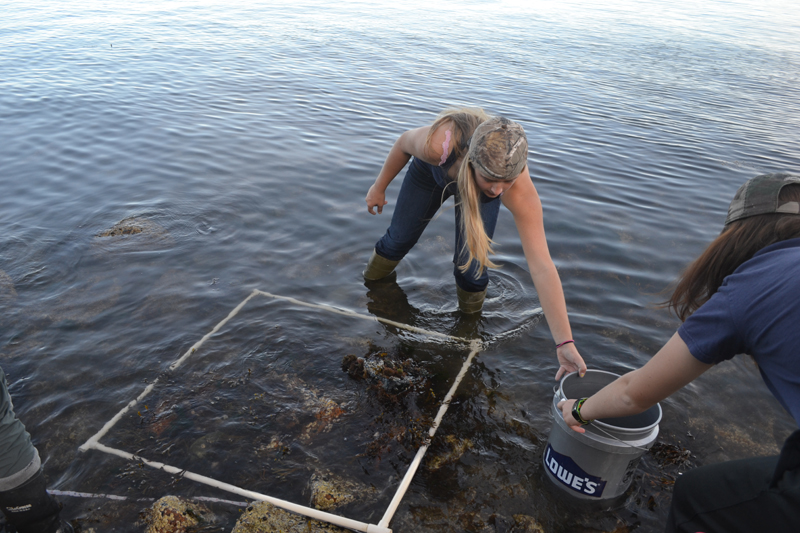
Our experiments included a transect and quadrat survey of juvenile lobsters in Hurricane's low intertidal, towing for larval lobsters and other planktonic organisms with plankton nets, deploying tethering platforms with juveniles on them to study lobster predation, and finally designing, implementing, and collecting underwater footage of modifications to three of Hurricane's demonstration traps to see if we could improve the traps ability to retain legal-sized lobsters. 

For this project, we collaborated with Noah Oppenheim, a graduate student who came to Hurricane earlier in 2013 to conduct research on juvenile lobster predation. This allowed students to learn about and replicate Noah's experiment, how scientists collect data, and how science and scientists fit into the grand scheme of managing the lobster fishery.

The skippers program (which also includes George Stevens Academy, Deer Isle Stonington High School, Harraguagus High School, and Mount Desert Island High School), is now in the process of designing and testing the viability of a trap fishery for winter flounder in Maine. You can read more about their project here.

Subscribe in a reader

Eastern Maine Skippers Program

Students from Vinalhaven and North Haven gathered on Hurricane in October 2013 for a two-day intensive trip as part of the Eastern Maine Skippers Program--a new curriculum thread in coastal Maine schools that is designed to make high school education more relevant for students participating in the lobster industry.  This program was focused on introducing students to different ways they can do science to improve their knowledge of lobsters at the larval, juvenile, and adult stages.

DSC_2926.JPG

Our experiments included a transect and quadrat survey of juvenile lobsters in Hurricane's low intertidal, towing for larval lobsters and other planktonic organisms with plankton nets, deploying tethering platforms with juveniles on them to study lobster predation, and finally designing, implementing, and collecting underwater footage of modifications to three of Hurricane's demonstration traps to see if we could improve the traps ability to retain legal-sized lobsters. 

For this project, we collaborated with Noah Oppenheim, a graduate student who came to Hurricane earlier in 2013 to conduct research on juvenile lobster predation. This allowed students to learn about and replicate Noah's experiment, how scientists collect data, and how science and scientists fit into the grand scheme of managing the lobster fishery.

Subscribe in a reader