Current Research Projects
Trials of A Novel Biodegradable Lantern Net Cover for Biofouling Mitigation
Scientific Article: In Progress
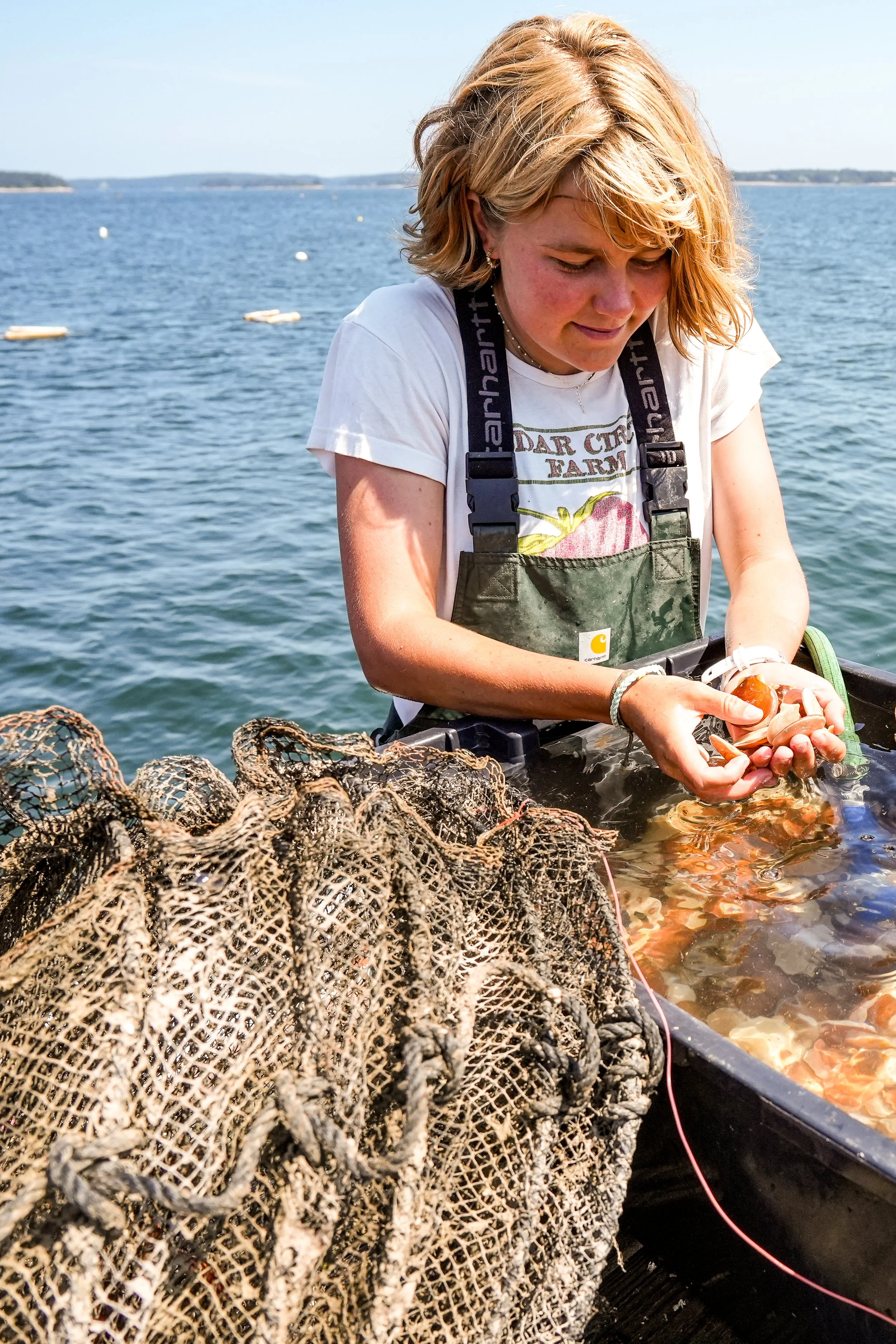
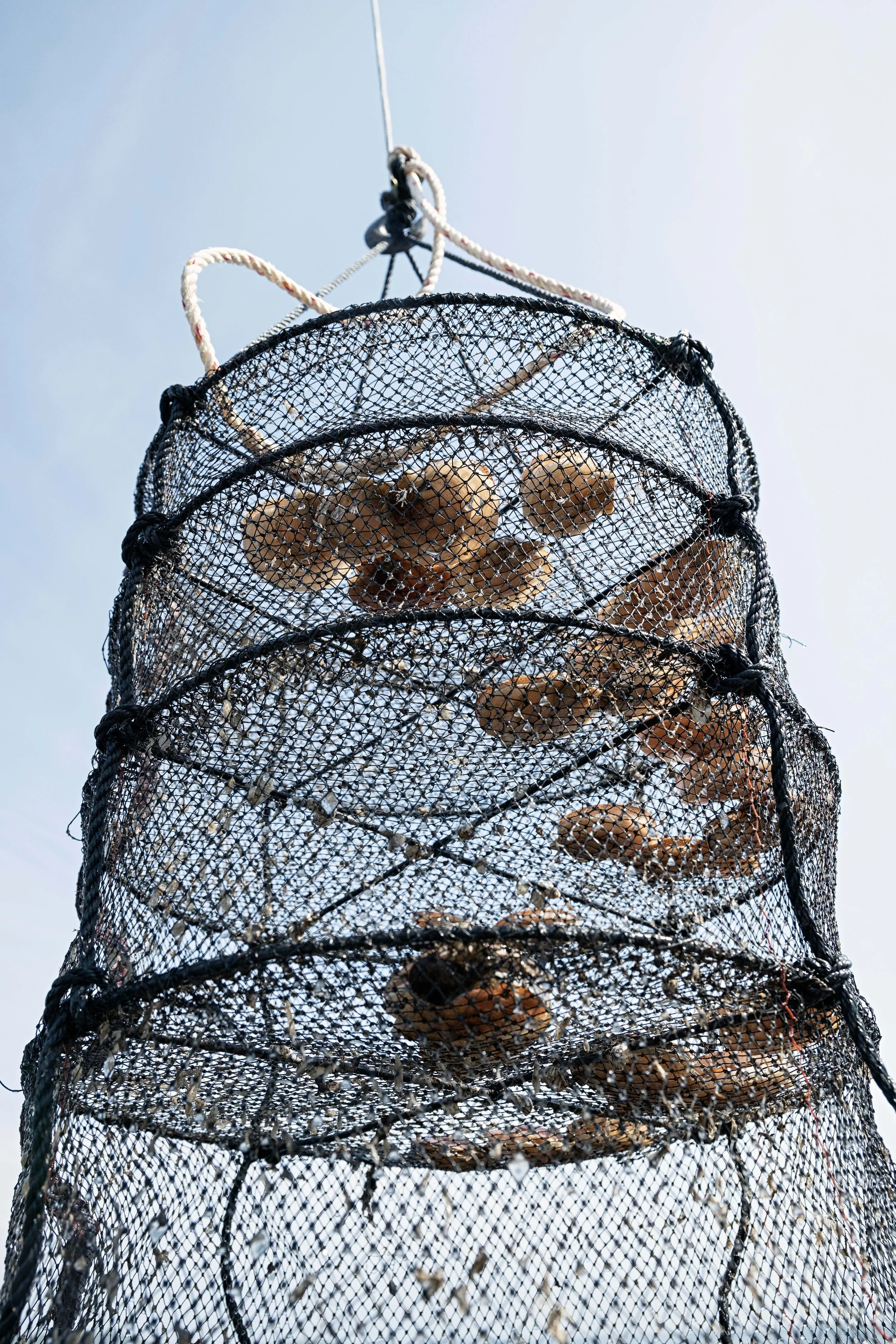
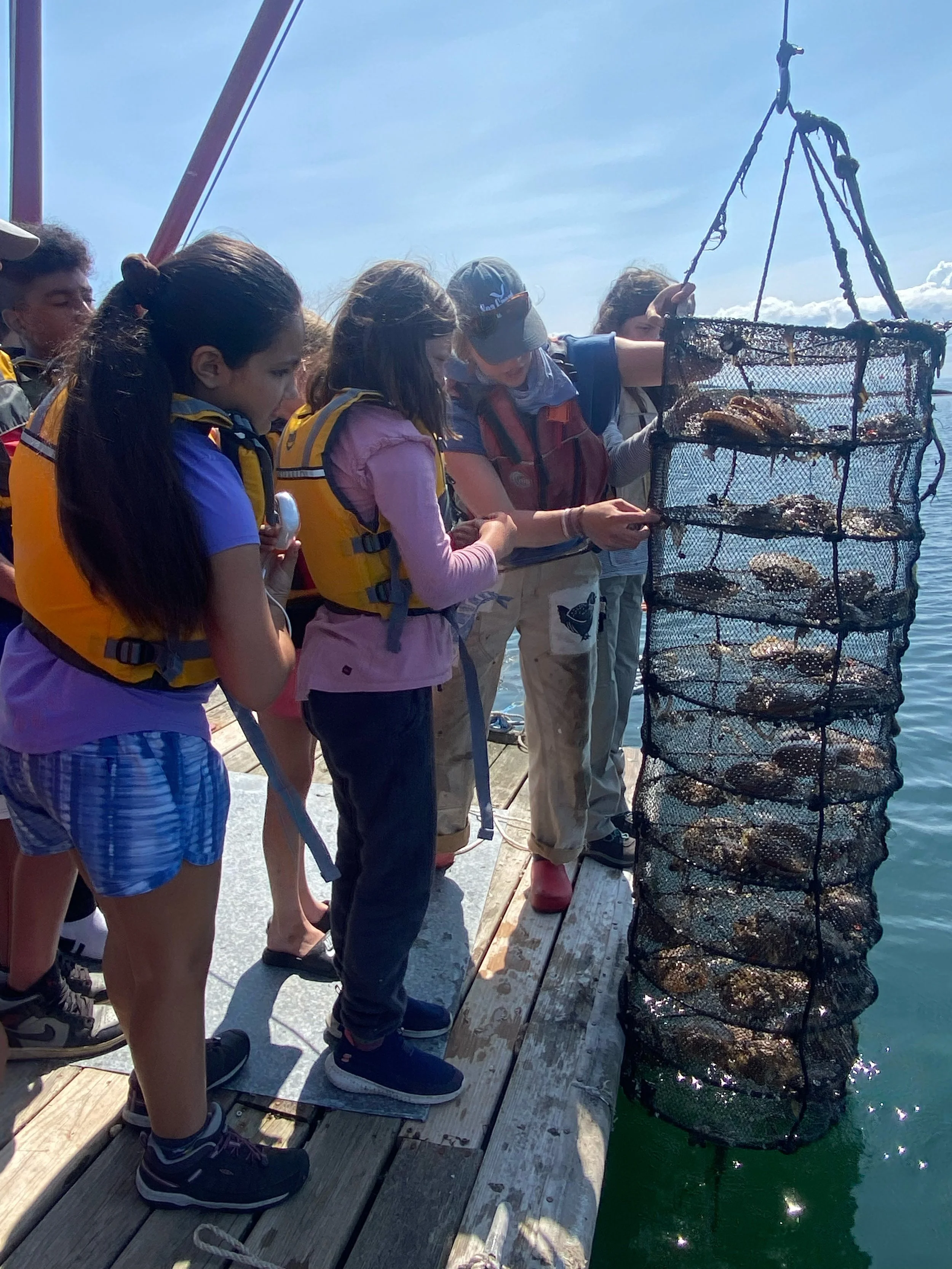
This project trialled biodegradable mesh covers intended to decrease the settlement of fouling organisms on lantern nets, a common grow-out method for cultured Atlantic Sea Scallops. The mesh lantern net covers are a novel use of a beechwood fiber sustainably sourced from Forest Stewardship Council certified forests and developed by the Ocean Farm Supply company. Through deployments on two Penobscot Bay farms, Hurricane Island and Pen Bay Farmed Scallops, this project tested for impact on (1) farmer labor and time, (2) biofouling accumulation and community composition, (3) scallop health and condition, and (4) localized benthic sediment carbon accumulation. Deployment of covered and uncovered lantern nets stocked with market-size scallops occurred for 4-6 week periods from May through early October in 2024 and 2025, covering the settlement times of a variety of common fouling species.
Morphometric and Energy Allocation Differences Between Farmed and Wild Sea Scallop Populations


Scientific Article: In Review
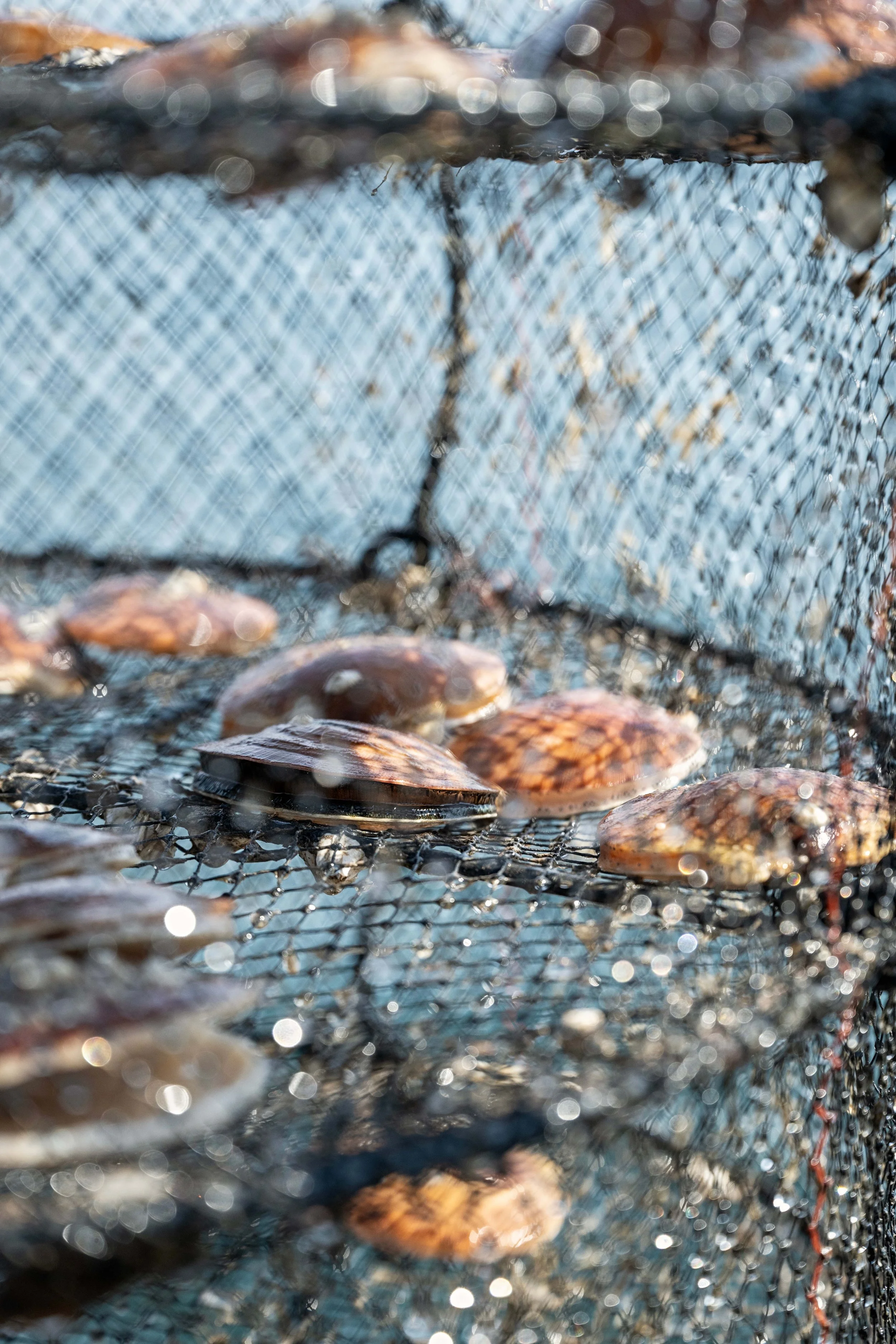
Beginning in 2019, we collected morphometric data from farmed scallops reared in lantern nets and bottom cages, and from wild scallops collected by SCUBA, at paired sites in Penobscot Bay, including Hurricane Island, Marsh Cove (North Haven), and Andrew’s Island (Stonington). Sampling occurred weekly during summer and early fall and monthly or as possible otherwise. For each individual, we recorded shell height and weight, sex, and the wet masses of the gonad (including crystalline style), adductor muscle, and remaining viscera. From 2020–2022, peak GSI occurred at similar times in farmed and wild populations; however, farmed scallops exhibited up to 28% larger adductor muscles, 35% larger gonads, and 33% larger viscera, while wild scallops had up to 38% heavier shells. These differences in energy allocation have implications for reproductive output, larval supply, and time to market.
Penobscot Bay Sea Scallop Tagging
Scientific Article: In Progress
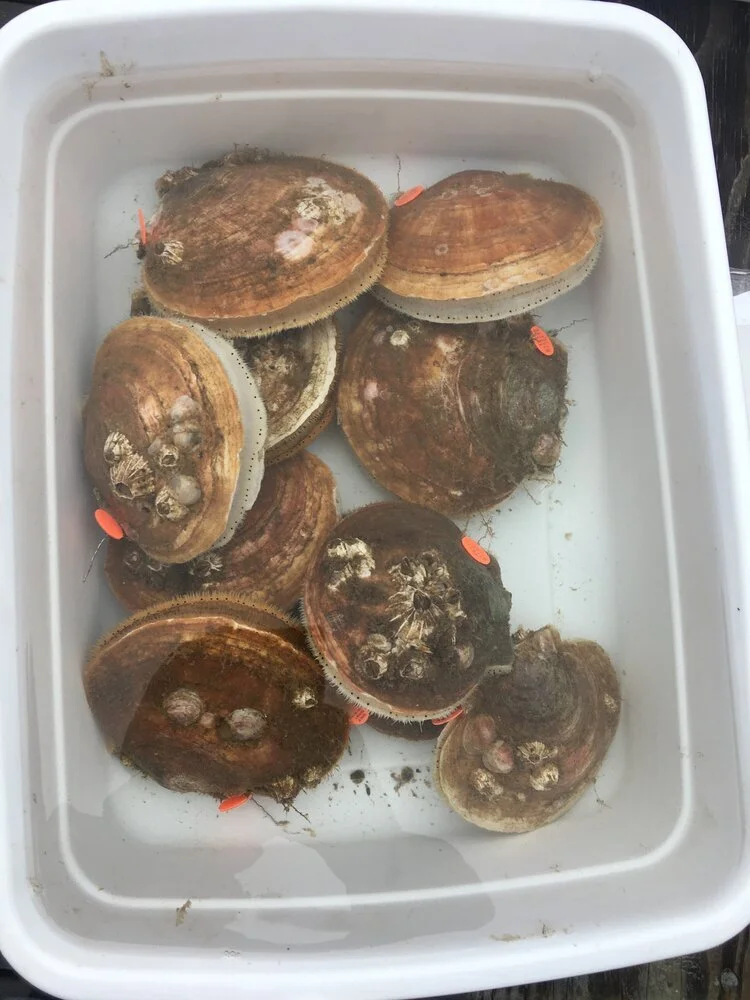
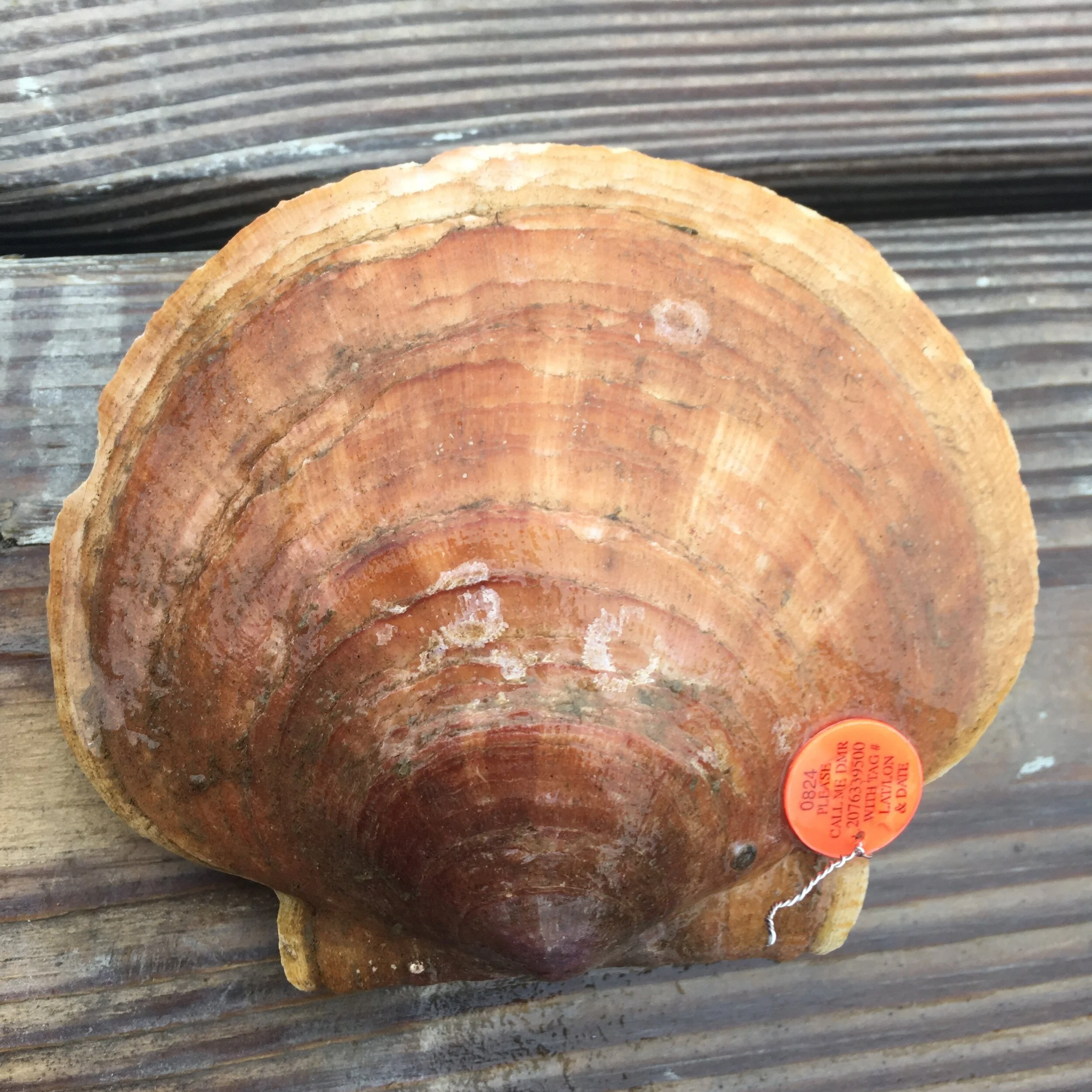
In collaboration with the Maine Department of Marine Resources (DMR) and funded by Maine Sea Grant Program Development funds, Hurricane Island conducted a sea scallop tagging study in Spring 2020. This tag-recapture study provided spatially explicit growth and movement information. A total of 800 scallops were tagged and released back into the Lower Penobscot Bay rotational management area. 95 wild scallops were recaptured by the fishery approximately 1.5 years later. During the same time period growth was also observed for 153 scallops in lantern nets at our aquaculture site. There was no detectable movement during this tagging study. The shell height growth was nearly identical between the wild and aquaculture scallops, but the aquaculture scallops had faster shell width growth. Observed growth was notably slower than recently reported estimates, including the sample area in a larger geographic range. For more information, check out Phoebe’s blog post and the Penobscot Bay Tagging Report published by the DMR.


Midcoast Maine Cooperative Scallop Project
Scientific Article:
Caitlin M Cleaver, Skylar R Bayer, Marissa D McMahan, Thomas Kiffney, Ruby Krasnow, Phoebe Jekielek, Bailey Moritz, Jessica Batchelder, Suzanne N Arnold, Carla M Guenther, Dan Miller, Tad Miller, Richard A Wahle, Jim Wotton, Thomas H Young. The effects of small-scale closed areas on the Atlantic sea scallop Placopecten magellanicus in Maine, Marine and Coastal Fisheries, Volume 18, Issue 1, January 2026, https://doi.org/10.1093/mcfafs/vtaf041
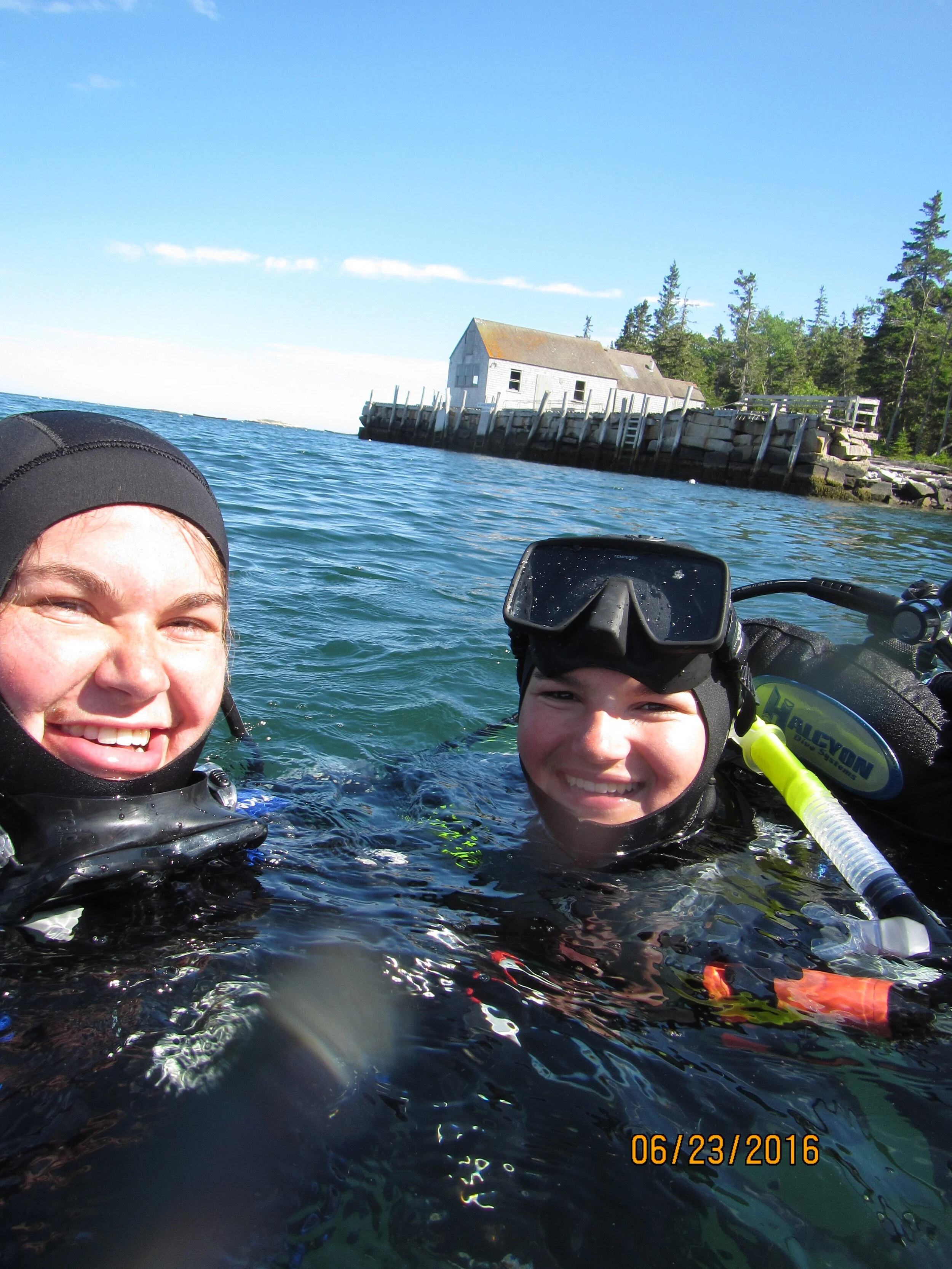
In June 2013, Midcoast Maine scallop fishermen initiated discussions with Hurricane about implementing a small-scale closed area on Lower Muscle Ridge south of Spruce Head in western Penobscot Bay. This led to a three-year closure to harvesting of the Atlantic Sea Scallop (Placopecten magellanicus) in October 2013. Hurricane Island coordinated the project and partnered with the Maine Department of Marine Resources, Island Institute, the University of Massachusetts Dartmouth, Penobscot East Resource Center, and the University of Maine to establish the Midcoast Maine Cooperative Scallop Project (MMCSP). Hurricane’s project team conducted baseline and follow up surveys in 2013 - 2017 to determine scallop abundance inside of the closed area and in adjacent areas and collected data on larval supply to the areas using spat bags. You can read the senior capstone project of Jessie Batchelder (Hurricane Research Intern, Assistant, and Aquaculture Manager 2016-2019) here or the article published in the journal Marine and Coastal Fisheries here.