Science for Everyone

Gulf of Maine Field Research Station Workshop

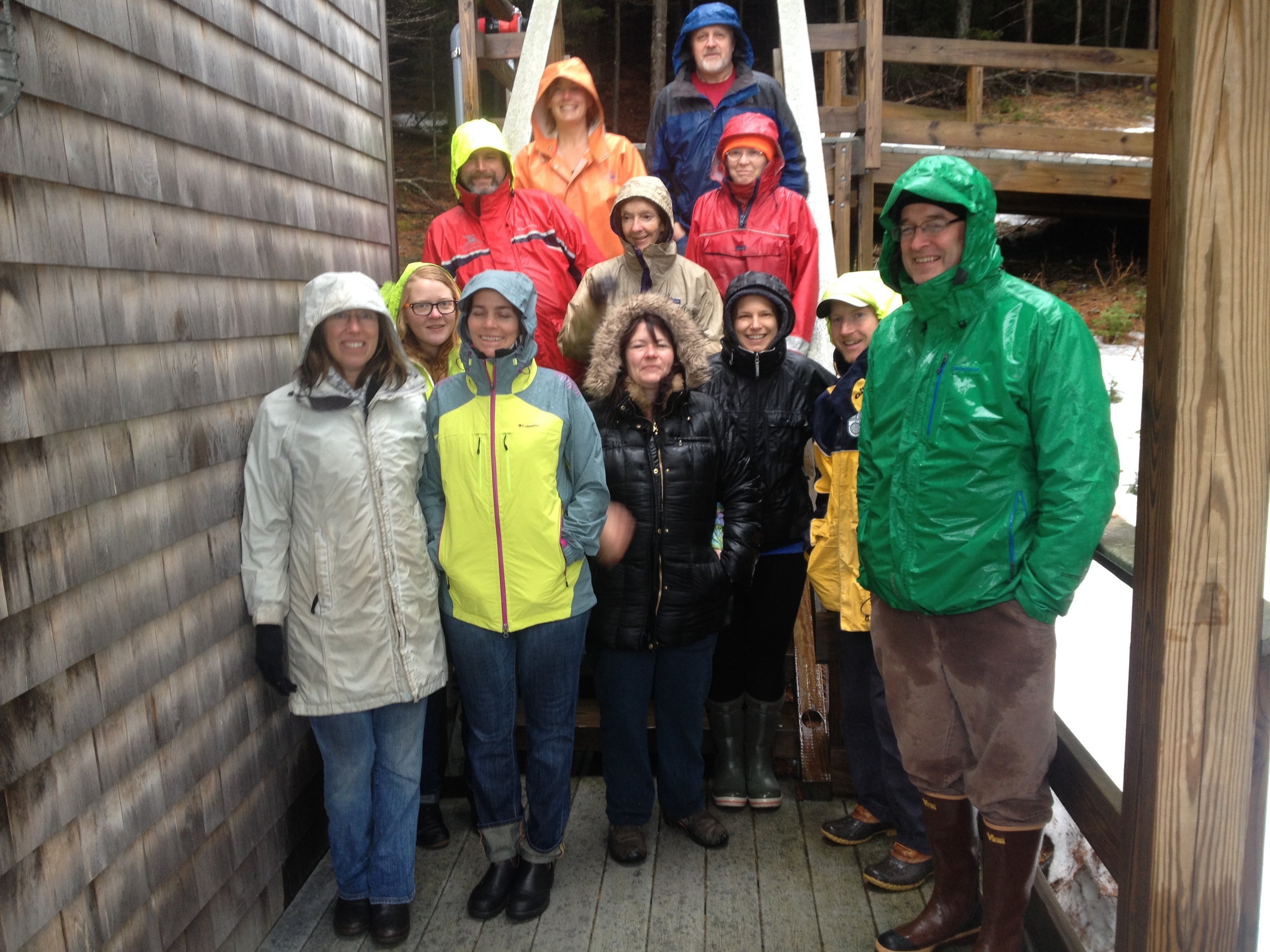
Workshop attendees tour the Bowdoin Coastal Studies Center in Harpswell, ME. 

Workshop attendees tour the Bowdoin Coastal Studies Center in Harpswell, ME. 

Alice, HIF Science Educator, and I had the opportunity to participate in a weekend Gulf of Maine field station gathering (March 28th - 30th, 2014) at Bowdoin College in Brunswick, ME. Participants included representatives from 12 Gulf of Maine field research stations, including: the Bates-Morse Mountain Conservation Area and the Coastal Center at Shortridge (Bates College), Bowdoin College Marine Laboratory & Coastal Studies Center and Bowdoin Scientific Station at Kent Island, College of the Atlantic's McCormick Blair Mount Desert Rock Field Station and Great Duck Island Eno Marine Field Station, Suffolk University's R.S. Friedman Field Station and Cobscook Bay Laboratory, Schoodic Institute's Schoodic Education and Research Center, Shoals Marine Lab which is associated with the University of New Hampshire and Cornell University, the UMass Boston Nantucket Field Station, the UMass Marine Station at Hodgkins Cove, and Acadia University's Evelyn and Morrill Richardson Field Station in Biology on Bon Portage Island.

We came away from this gathering excited about all of the opportunities there are for collaboration in the Gulf of Maine, and we look forward to becoming part of a formal network of field stations that will coordinate monitoring efforts, share resources, and leverage our collective expertise to promote the role of place-based science in our changing world. We gained invaluable knowledge about how other field stations operate, their research agendas, and how Hurricane Island's Field Research Station can fit into but also build upon and improve the research capacity in the Gulf of Maine. Stay tuned-- more Gulf of Maine Field Station Network updates soon!

Subscribe in a reader

HIF to coordinate a collaborative research project

In June 2013, I had the opportunity to organize a collaborative research project with a number of partner organizations and some scallop fishermen. This project has been some of the most rewarding work I have done to date because it brings a diverse group of people to the table who are all genuinely interested in sustaining the state's scallop resource and would like to better understand how small-scale closed areas might be an effective management tool to help do so.

It all started with a group of Midcoast Maine scallop fishermen who decided to close a small area of western Penobscot Bay to harvesting for three years starting in 2013. Working directly with scallop managers from the state's Department of Marine Resources (DMR), the fishermen identified the area's boundaries. The closure was officially implemented on October 10, 2013 (more information about closures in the scallop fishery is available here). DMR and other organizations, including the Island Institute, Penobscot East Resource Center, Dr. Wahle's lab at The University of Maine, Maine Sea Grant, Husson University, and Dr. Stokesbury's lab at the University of Massachusetts at Dartmouth developed monitoring protocols to gather baseline data from inside and outside of the closed area with the objective of assessing the effectiveness of the closure in rebuilding local scallop populations. In October and November 2013 the research team, working from fishing vessels, completed five days of dive surveys and two days of drop camera work. In addition, we deployed spat bags which will be collected and processed (we will measure and count the juvenile scallops caught in the bags) in May 2013 to understand general source-sink dynamics in the Lower Muscle Ridge area of Penobscot Bay. 

I will continue to coordinate this project through the Hurricane Island Field Research Station and work with the fishermen and other project partners this summer to repeat surveys and analyze the data collected to date. We hope to see an increase in scallop populations inside the closed area, indicating that this particular small-scale targeted closure may be an effective management tool to protect scallop populations near the Lower Muscle Ridge Channel. However, we may find that the designated closed area is not actually increasing scallop populations and should therefore be re-opened.... stay tuned!

For more information about the progress to date, please see the Island Institute's press release.

Subscribe in a reader

DMR hearing in Bucksport

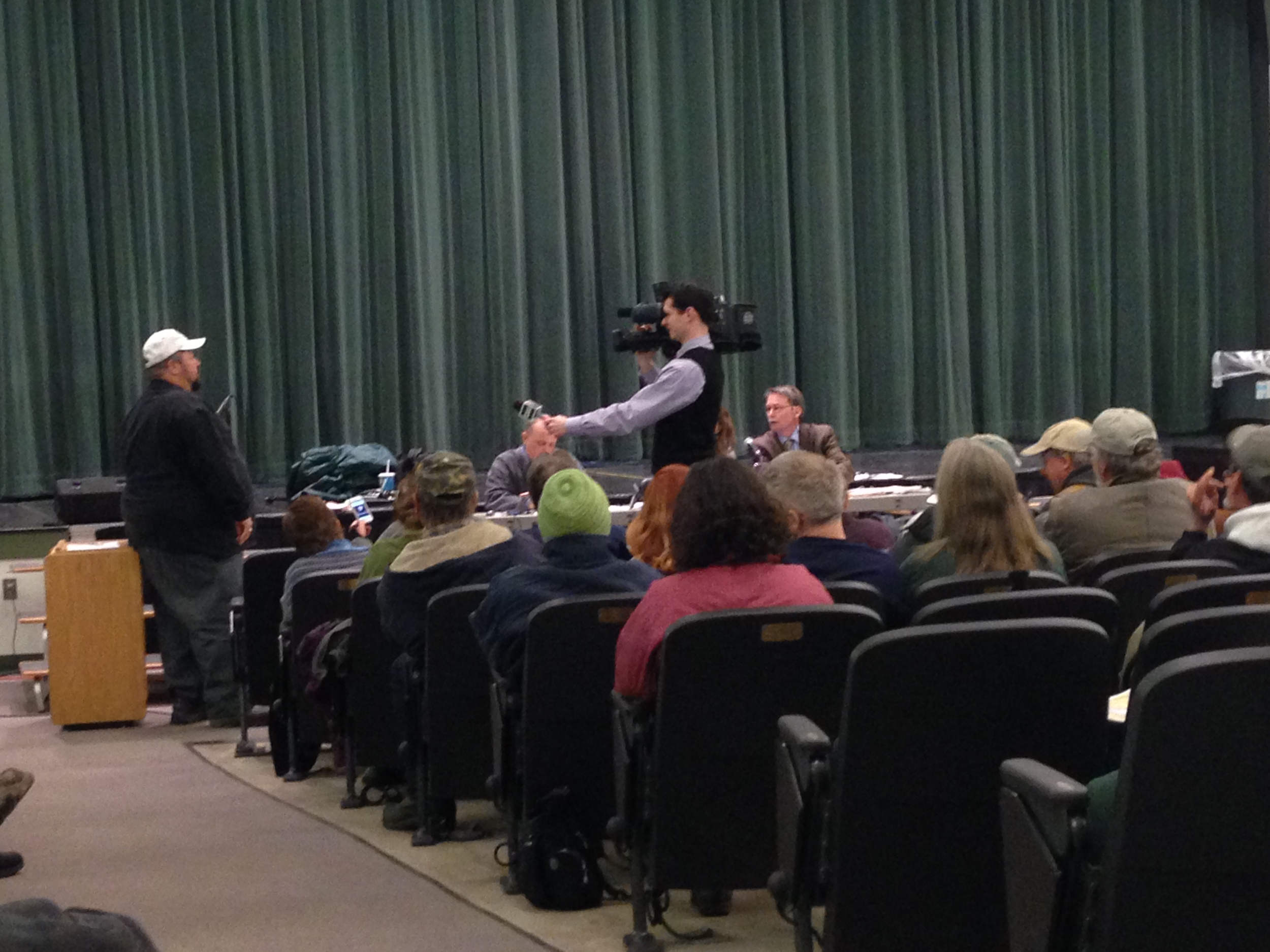
A fisherman from Bucksport expresses his concern about the lack of data on mercury levels in crabs. 

A fisherman from Bucksport expresses his concern about the lack of data on mercury levels in crabs. 

On Monday night (March 17, 2014), I attended the Maine Department of Marine Resources (DMR) hearing held in Bucksport regarding the two-year closure to lobster and crab harvesting. The closure is located at the mouth of the Penobscot River and extends approximately 7 square miles. The hearing was an opportunity for the public to voice concerns about or support for the implementation of the closure. 

DMR officials summarized the data they had reviewed and their process for making this decision. DMR believes that an area closure is the appropriate measure to protect the public from the levels of mercury recorded in lobster samples collected at the mouth of the river. Sampling in other areas of Penobscot Bay revealed that high mercury levels seemed contained to a small area, and the closure is estimated to affect approximately 10 lobster and crab harvesters. DMR acknowledged that those harvesters will have to shift some of their gear outside of the closed area and hopes that other fishermen will understand and accommodate the shift. 

Harvesters raised concerns about how lobsters and crabs take up methylmercury. It’s commonly believed that lobsters take up methylmercury from the sediment and from what they eat (more info on bioaccumulation here), but there is a lack of understanding on how quickly lobsters take it up directly from water.... so the question remains: will harvested lobsters stored in the closed area waters take up mercury from the surrounding water while they are waiting to be sold?

Going forward, the DMR will work with the Maine Department of Environmental Protection and the Maine Center for Disease Control and Prevention. These agencies plan to undertake additional data collection year round over the next two years. To ensure their ability to compare data sets, the state agencies will follow the same protocol used to collect data for the independent study carried out in 2006 - 2013. 

The mercury is believed to have come from HoltraChem plant in Orrington which is now closed, but operated from 1967-1982. A 2002 court ruling initiated the study on mercury levels in the area. For more background on the issue, please see the following articles from: The Working Waterfront  and the PenBay Pilot

Subscribe in a reader

Fishermen's Forum Recap

Principal Todd West explains the Eastern Maine Skippers Program during the Fishermen's Forum

Principal Todd West explains the Eastern Maine Skippers Program during the Fishermen's Forum

The Fishermen’s Forum, held annually in late February/ early March at the Samoset Resort in Rockport, Maine is always one of my favorite times of year. OK, I know, that may sound a bit odd, but just hear me out… The event brings together fishermen, academics, graduate students, nonprofit organizations, and fisheries managers from around the state and New England.  The seminars cover a wide range of topics from annual meetings of various harvester groups like the Maine Lobsterman’s Association to updates on scallop and lobster management at the state level, through the Department of Marine Resources (DMR), to high school students presenting about their own research-- there’s something for everyone! The event is always well attended with bustling exhibit halls and packed seminar rooms. Not to mention it's a great distraction from the long winter we've been having this year! 

The Hurricane Island crew was well represented and spent most of the two days talking with people interested in learning more about our organization and the summer programs on the island. 

One of my favorite presentations was from the Eastern Maine Skippers Program, which organized a seminar updating the community on students' progress made to date and sharing the different flounder traps designed by each school. The audience had the opportunity to provide feedback on which flounder trap they believed would be the most effective. In the spring, the schools will test how well the traps catch flounder, and work to combine their ideas, improve their design, and make a recommendation to the DMR.

I also had the opportunity to present as part of a panel on state scallop management and closed areas. The session was called “Thinking Outside the Box:  Spatial Closures in the Scallop Fishery.” I summarized methods used in a collaborative research project we are doing in partnership with a number of organizations and Midcoast scallop industry members. Look for a blog post on that coming soon... 

Subscribe in a reader

Visualizing Global Weather Conditions

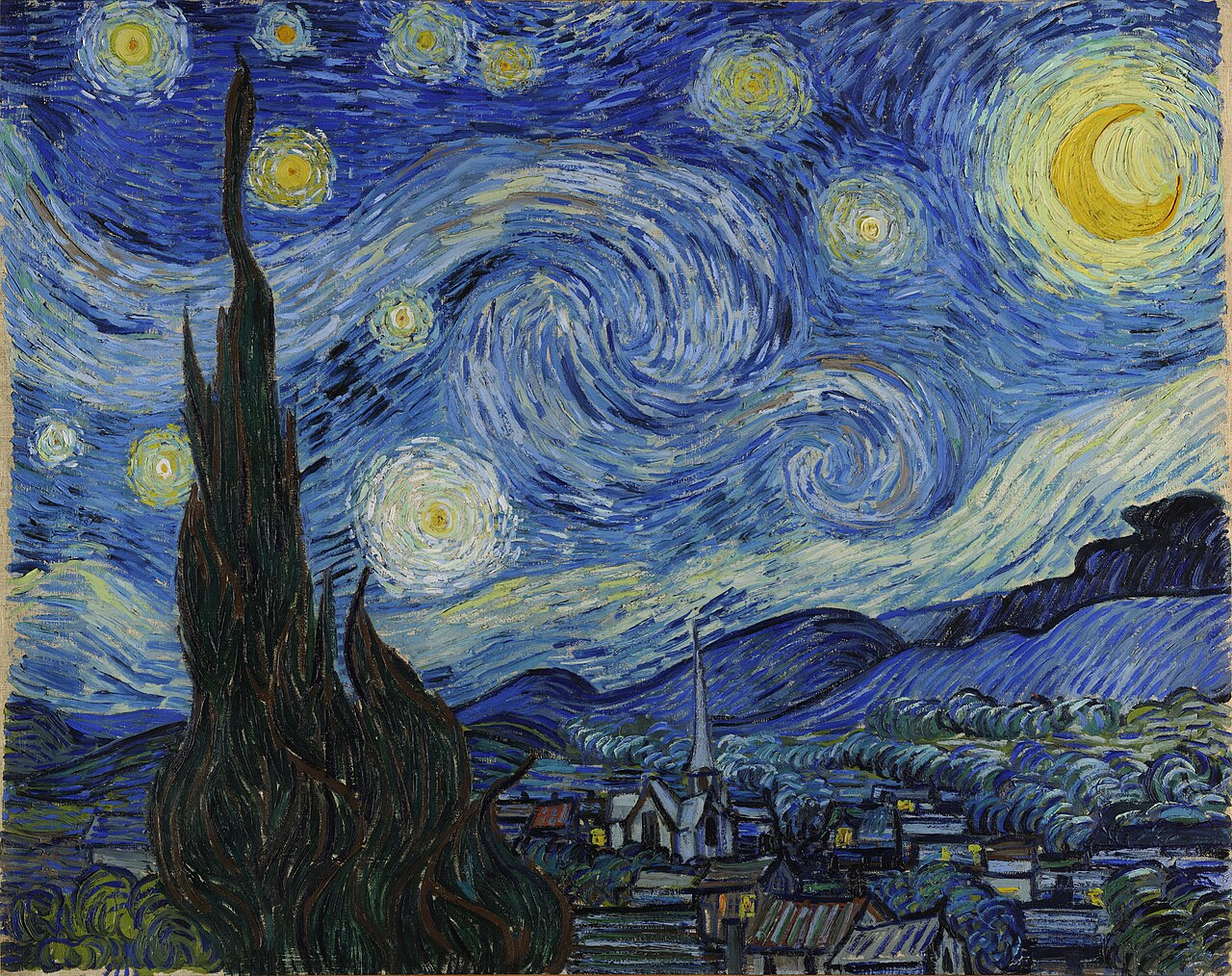
There is an incredible new visual data resource, earth, developed by Cameron Beccario, that compiles and updates wind and ocean data from a variety of sources including NOAA, the US National Weather Service, and OSCAR, to create beautiful animated data displays on the globe! Take some time to play with all of the modes, overlay options, and global projections to see some unique views of Earth. Check out some of the screen shots I took below (each one clicks through to their respective animation). The surface currents animation reminds me of van Gogh's Starry Night. What do you think?

This is a Waterman Butterfly projection of Earth, looking at the wind direction and speed at the 250 hPa pressure level, which is about the height of the Polar Jet Stream.

This is a Waterman Butterfly projection of Earth, looking at the wind direction and speed at the 250 hPa pressure level, which is about the height of the Polar Jet Stream.

This image shows surface ocean currents on an Orthographic projection of Earth.

This image shows surface ocean currents on an Orthographic projection of Earth.

This is a Stereographic projection of the wind at the surface and the mean sea level pressure.

This is a Stereographic projection of the wind at the surface and the mean sea level pressure.

Subscribe in a reader