Science for Everyone

The Art of Scientific Illustration

Northern Black Racer Lifecycle, Zoe Keller

Northern Black Racer Lifecycle, Zoe Keller

I wanted to share a few thoughts about the importance and relevance of scientific illustrations in effectively investigating and communicating science. During the programs we run on Hurricane Island for students, we often dedicate time to nature journaling and drawing from observations of newly collected samples or specimens.

Why bother drawing when you can just snap a photograph? For one thing, drawing forces you to look more carefully at every detail of your subject as you depict it on the page. Illustrations can also simultaneously show several different stages of development, multiple angles, and highlight specific characteristics of the subject while still keeping it in the context of its environment. Most importantly, drawing allows you to omit distracting information to help focus the viewer on the details that are key to identifying an organism, or are important to that subject's life history. Zoe Keller has a beautiful example of this in her illustration of the lifecycle of Maine's Northern Black Racer snake Coluber constrictor (you can see more of her illustrations in her blog, Compass and Wheel). In one compelling image, Zoe is able to convey important information about how the pattern of Coluber constrictor is different from juvenile to adult snakes, what this snake's eggs look like, the structural anatomy of this snake's ribs and vertebra, and how snakes shed their skin.

If you think you can't draw, never fear! You don't need to be an expert artist to take down valuable visual information that can inform you back in the lab more reliably than photography. Even if you start with simple gestural drawings that note an organism's movement, or sketches that inform coloration, patterning, and shape, this can supplement your field notes and help you remember more about what you observed.

If you are interested in reading more about how to make good observations, the importance of illustration, or want to see some great examples from different naturalists field notebooks, I recommend Field Notes on Science & Nature, edited by Michael R. Canfield.

Subscribe in a reader

Maine Might Make Moves on Ocean Acidification!

On Monday January 13, 2014, the Maine Legislature's Marine Resources Committee gathered testimony about a Legislative Document that would establish a formal commission to study the effects of ocean acidification and its potential effects on commercial shellfish harvested and grown along the Maine coast. You can read L.D. 1602 here. This hearing was well attended by stakeholders from all of Maine's major fisheries, scientists, environmentalists, and others.

If this measure is signed by Gov. Paul LePage, the commission would start by identifying the current gaps in knowledge about ocean acidification and make recommendations about how Maine can combat the negative effects of acidification on tourism, fisheries, and the Gulf of Maine ecosystem.

Check out this article in the Portland Press Herald for more information. The bill was considered on January 13, 2014 by a committee of Maine Legislators. Thanks to Rep. Michael Devin from Newcastle for introducing the measure--this could be an exciting step in the right direction for the health of the ocean!

If you want to get involved in supporting this effort, you can sign a petition here.

Subscribe in a reader

Seal Island's Live Seal Cam

Great news! It is gray seal (Halichoerus grypus) pupping season, and Seal Island National Wildlife Refuge is using a HD camera to give scientists insight into this event. It isn't easy to observe events that happen during Maine's worst weather conditions, and this camera means that scientists can observe seals during the whole pupping season from the comfort of their computer screen and without disturbing these 300-pound pinnipeds. Seal Island has the second largest gray seal colony in the United States, and is not too far from Hurricane Island (although Google Maps wouldn't give me directions...I suppose they are still working on their inter-island transit time). You can read more about gray seals here. Speaking of seals, if you want to come out to Hurricane Island for our Maine SEAL program, I promise you will get to see seals lounging on the ledges to the East of Hurricane Island!

This is a still still taken on January 15. Click the image to visit the video feed which broadcasts live starting at 10am every day.

This is a still still taken on January 15. Click the image to visit the video feed which broadcasts live starting at 10am every day.

Subscribe in a reader

New Year, New Calendar

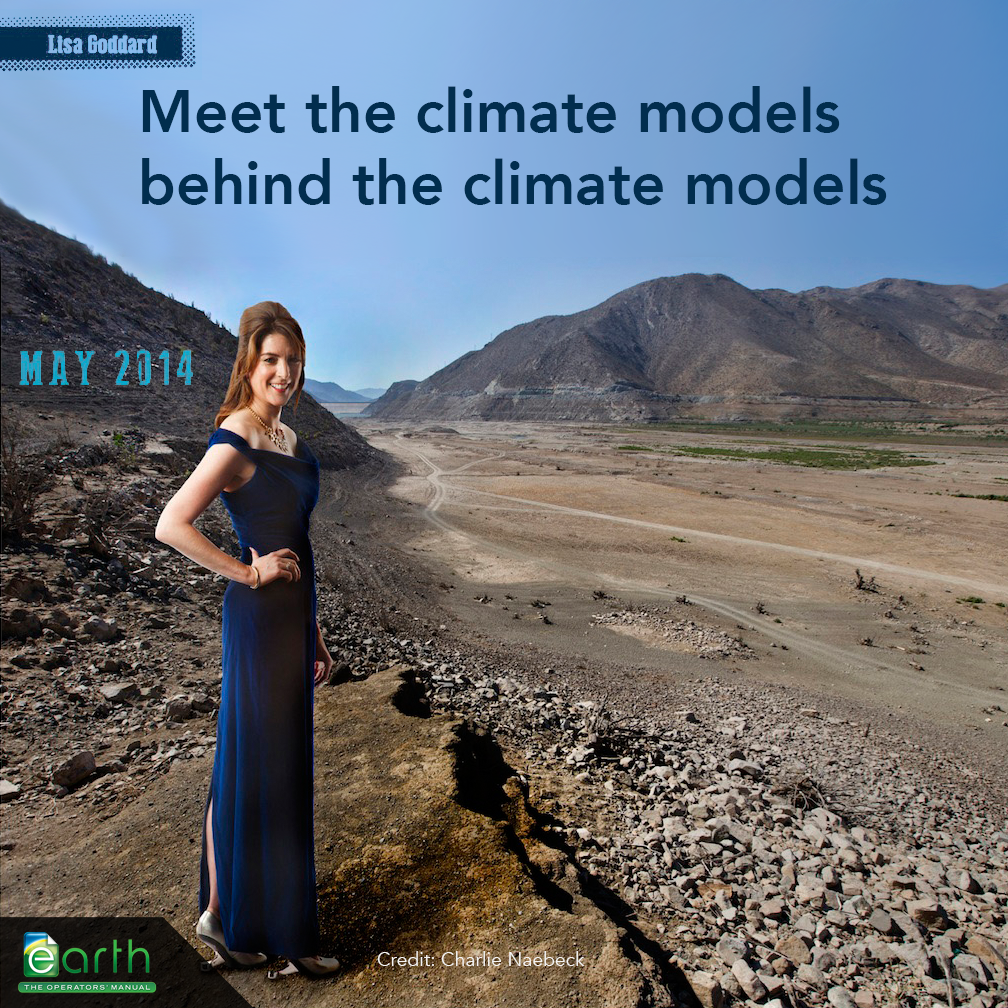
Photo of Lisa Goddard by Charlie Naebeck.

Photo of Lisa Goddard by Charlie Naebeck.

If you are in the market for a super cool science calendar, check out the 2014 Climate Models Calendar, which claims to be "the only calendar on Earth that shares the planet's hottest climate science and the people behind it."

Each month, the calendar features one of Columbia’s renowned climate scientists and includes information about their interests, work, and their favorite dataset, chart or climate phenomenon. The calendar also includes dates of weather and climate events that live in infamy, dates of key scientific meetings…in other words, everything you need to have an awesome year of science!

One of the portraits in the calendar features scientist Lisa Goddard, Director of the International Research Institute for Climate and Society. Lisa's work focuses on improving the reliability and use of climate models, especially those that indicate conditions over the next few decades in different parts of the world.

Subscribe in a reader

Scallops certified "sustainable" by the Marine Stewardship Council

scallops.jpg

Maine's Scallop season opened December 2, 2013, and shortly after the first scallops appeared on dinner plates the fishery was certified "sustainable" in accordance with the Marine Stewardship Council's standards for sustainable, well-managed fisheries.  You can read more about this decision here. 

This certification was granted despite an objection filed by Togue Brawn of Maine Dayboat Scallops, Inc., with the support of the Maine Coast Fishermen’s Association. The objection is in response to a management loophole that exempts the Northern Gulf of Maine management area from regulations aimed at rebuilding and protecting the scallop resource. The objection argues that the management area has no real measures to prevent overfishing, which could make the "sustainable" designation for the whole fishery artificial and short-sighted.

The state's scallop fishery is managed by the Department of Marine Resources, which is a great source of information if you want to learn more about how the fishery works.

If you are interested in different fisheries that may or may not be "ocean-friendly" you can check out Seafood Watch, a program of the Monterey Bay Aquarium that makes purchasing recommendations for different species of fish and shellfish.

Do you think the scallop fishery is sustainable? Does the sustainability of a fishery affect your decision to consume different types of seafood? Post your comments!

Subscribe in a reader