Island Updates

A Sublime Dive into this Hurricane Season with The Cambridge School of Weston

Written by island educator, Lilla Fortunoff.

2019 is the 6th year that Marilyn DelDonno and Steve Scrimshaw have brought a group of students from the Cambridge School of Weston (CSW) to the Hurricane Island Center for Science and Leadership. This year is my 3rd season working as an educator on Hurricane Island, but it is my first Spring here and my first time working with school programs. I am in awe of the community and commitment that has been fostered here by students who come to the island acquaintances and leave as great friends.

It requires energy and care to wake up every day and choose to be a positive force in this community. This choice is one I rejoice in and have made again and again since June 2017. Seeing the way that the students continued to make this choice despite 5:00 am wake ups to catch low tide before breakfast and taking only two showers in eight days was inspiring. Seeing them make the choice because of the knowledge that the students had each other’s backs and the idea that curiosity is cool made me happier than I can describe. They supported each other unconditionally during the raft challenge, rock climbing, and in times of learning new information. They put energy and care into taking time to laugh, sing, and dance. The dove fully into bringing out the most in each other and in their Hurricane experience. To hold silliness and focused responsibility in cohabitation within one self is a challenge to which the CSW group rose joyfully.


This year, not only did the group initiate original marine biology and ecology research projects (such as attempting to quantify the fecundity of Fucus vesiculosus (a species of intertidal algae), and counting and measuring the zooplankton found at different times of day and at different ocean depths), but Marilyn also added an environmental history component to the course. This included studying the lives of Penobscot and Wabanaki indigenous peoples who lived around Penobscot Bay and Hurricane Island as early as 5,000 years ago (though, indigenous peoples have lived in Maine since at least 11,000 years ago) and studying the experiences and lives of European immigrants who worked for the Hurricane Island Granite Company and their families in the late 19th and early 20th centuries. The final class project for the students will be to answer the question “What role has the lobster fishery had on the communities of Penobscot Bay?”. In order to help with this project, the students are reading The Secret Life of Lobsters by Trevor Corson and over the course of the week on Hurricane, we went lobstering to see how the magic happens and get a bit of an understanding of what lobstering entails. Additionally, we were able to connect the students to three members of the fishing community of Penobscot Bay: Yvonne Thomas who works for the Island Institute in Rockland and is the mother of lobstermen, Rick Wahle who is a marine scientist specializing in lobster at the University of Maine’s Darling Marine Center, and Kathleen Reardon who works for the Department of Marine Resources as the lobster biologist for the state of Maine. The students became deeply immersed in all things lobster industry and asked extremely thoughtful and pressing questions of our guest speakers regarding the future of the lobster industry in Maine, the social dynamics of the people involved in lobstering communities, and whether or not our guests ate lobster themselves (yes). This week in mid-May was chilly, foggy, and rainy, but the students from CSW showed me the power in loving Spring on Hurricane.
Subscribe in a reader

Short, Sweet, and Sunny

Fun in the intertidal.

Fun in the intertidal.

Written by one of our island educators, Isabelle Holt.

It was such a pleasure having the Lewiston Middle School after school program out on Hurricane for the day earlier this month. This was Lewiston’s first time coming out to the Island and it was a day packed full of fun and adventure. In a spring marked by so much rain and fog that at times our solar battery bank was running low, Lewiston brought the sunshine in more ways than one.

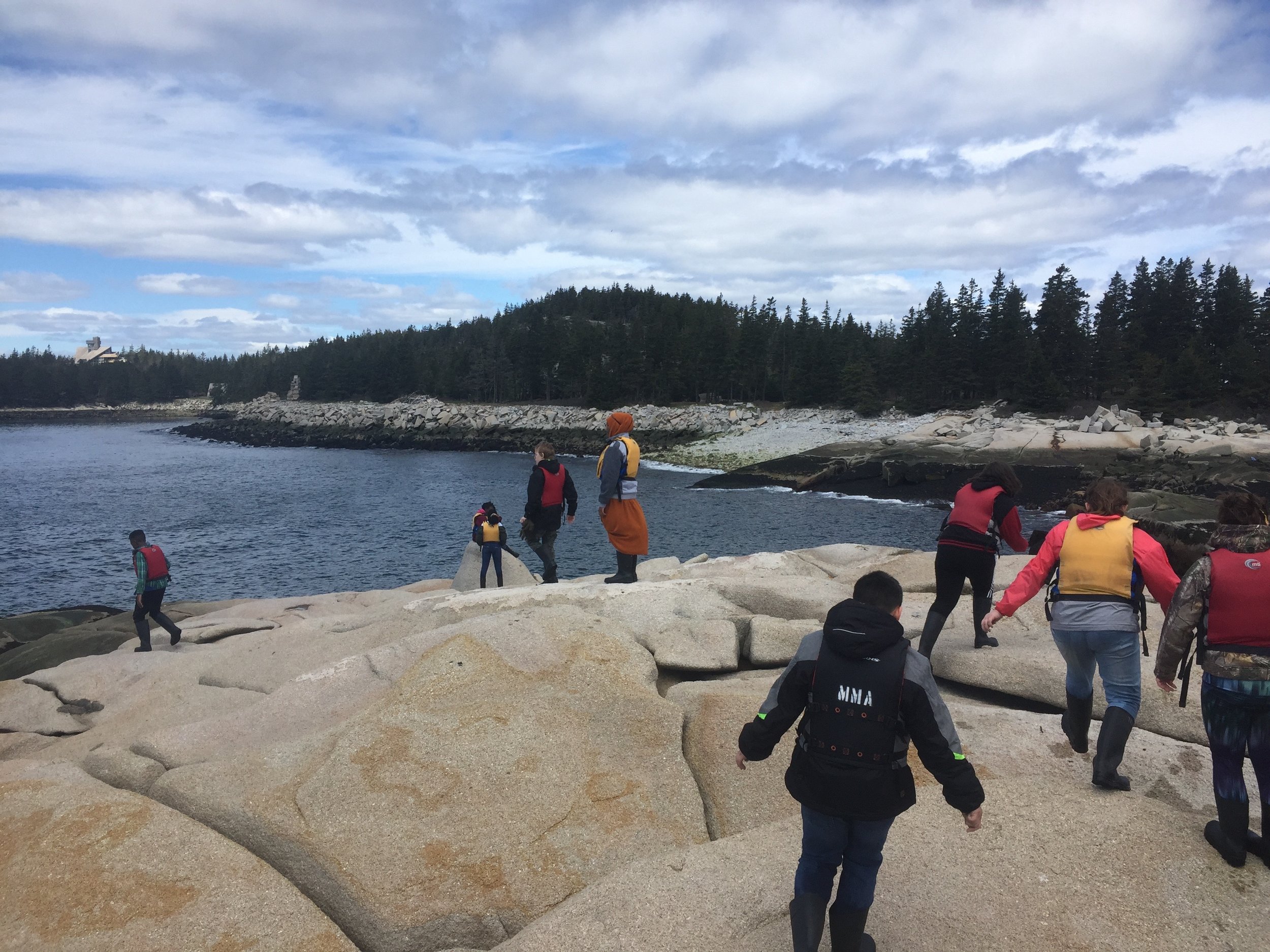
Exploring two-bush island.

Exploring two-bush island.

After a raucous ride over on the Equinox with the one and only Captain John Morin we put our boots on and got right out into the intertidal zone for some exploration. In a school system where more than 30 different languages are spoken by its students, translation by students for students was key to student engagement and enthusiasm. Helping someone else understand a new concept is a great way of ensuring that you yourself are comfortable with material and it was so great to see the connections the Lewiston students were making with one another and the place around them while on the island.

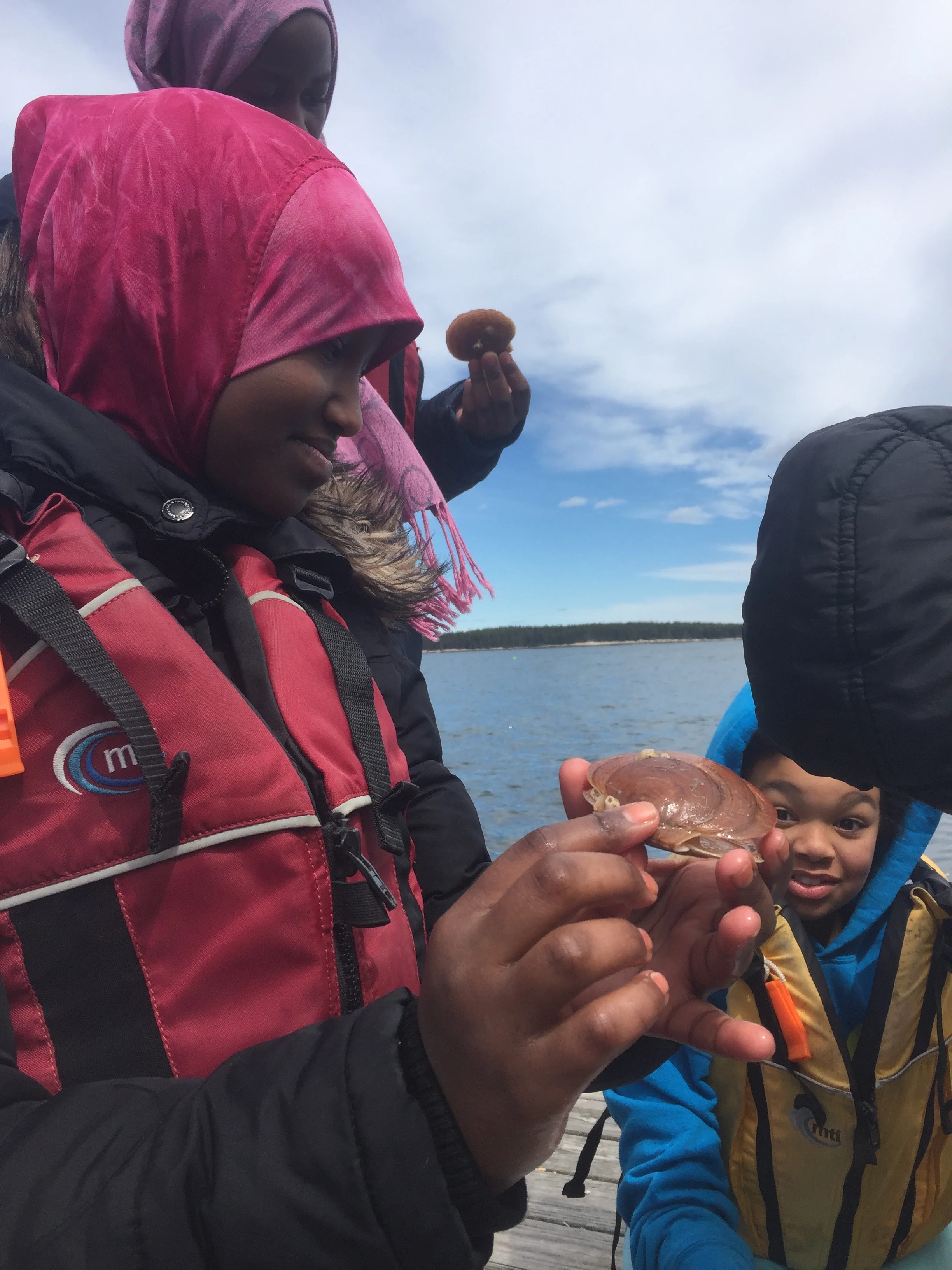
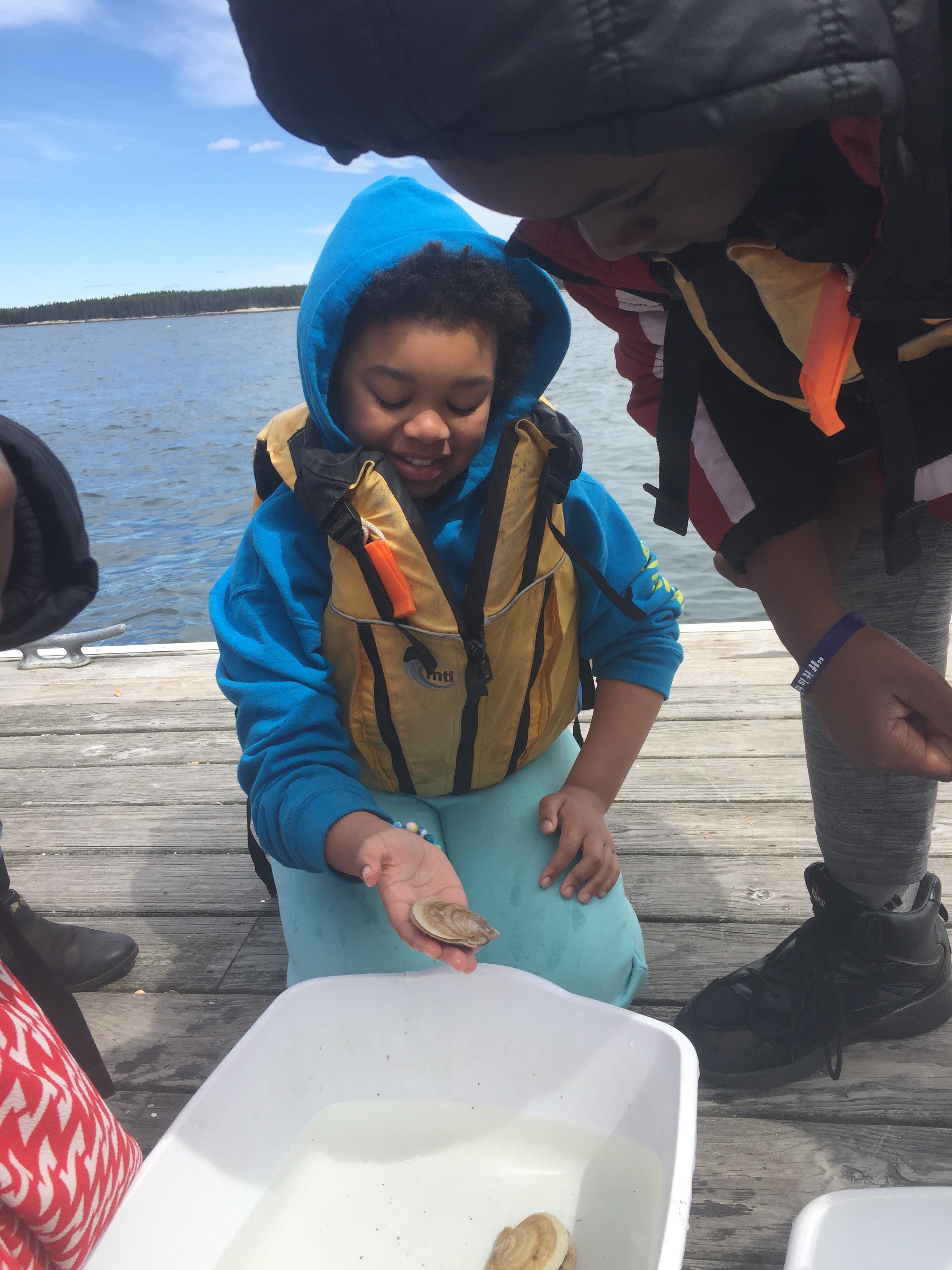
Scallop show and tell.

Scallop show and tell.

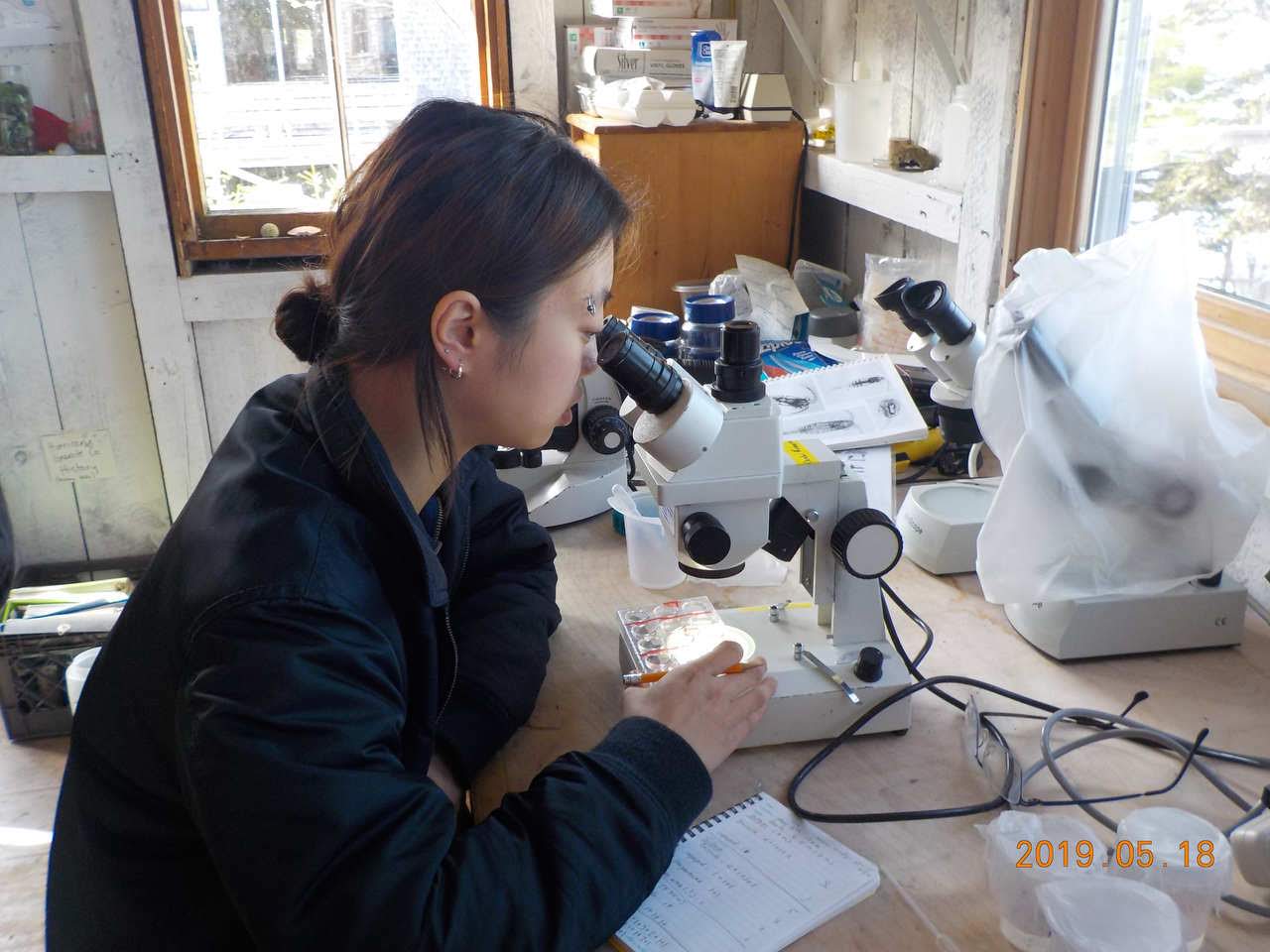
In the afternoon we were able to build on the students pre-existing knowledge about aquaculture from the 4H after school programing that they had been doing. It was great being able to get our hands on our Hurricane grown scallops that are finally getting close to eatable size - due to many years of careful care from our research team! Not only did we get to hold some scallops, students were also able to learn more about what they eat by doing plankton tows and examining what they found under the microscope.

All too soon it was time to take the boat back to Rockland after this short, sweet, and sunny day! On the ride back Captain John remarked that Lewiston was the “happiest group of kids” he’d had on his boat this season. Here’s to many more days of sun and smiles on Hurricane this season!

Scallop show and tell.

Scallop show and tell.

Subscribe in a reader

The Whispering Waves of Hurricane

Post written by Bridget Morton, Seasonal Island Director. Pictures by Ella MacVeagh, assistant cook.

Recently, I greeted a member of the Pen Bay Stewards to Hurricane Island, just as he stepped of the boat. He gazed at spruce trees overhead and eyed great blocks of granite. Eventually he spoke: “You can feel the spirituality here.”  

IMG_0025.JPG

Yes.  You can.  From its craggy shores to the highest trees, Hurricane sings sustaining joy to anyone who takes the time to listen.  For some of us, the island seems to have a soul, a soul that informs and supports our small community, so dedicated to scientific learning and growth.  

IMG_0031.JPG

One little pocket of peace is the island churchyard. Consecrated as holy ground by a Catholic bishop in quarrying days, it was shared by Hurricane’s Catholics at the turn of the twentieth century, and for a while there were multiple services every Sunday in that island church.  Sometimes, heading up to the ice pond or the garden, I imagine quarrymen, their wives and children, walking, on their only day of rest, up the same path to pray. During Outward Bound’s summers on the island, sweet weddings and christenings were held inside that small, grassy rectangle; every Sunday, rain or shine, the entire community migrated to the churchyard for morning meeting. Perhaps the first Sunday I spent on Hurricane Island, 45 years ago, my watchmate Chicky played ‘Morning Has Broken’ on her flute, while the rest of us listened rapt, rain dripping from our yellow slickers.  Today only the granite foundation and a small altar remain.

IMG_0028.JPG

I headed up that hill on a Friday evening in May with the students of Cambridge School of Weston. These nine young women and their chaperones had already brought energy and delight to their marine science studies here on Hurricane.  That Friday evening they held a Shabbat, possibly the first ever, in Hurricane’s churchyard. A couple of the teenagers explained for the rest us this ritual of their faith. They lit two tiny candles and invited us to wave in smoke and then hide our eyes from the light.  They led us in song, broke bread, shared water from a plastic bottle. They wanted us to understand that we were praying for peace, for community. They said we had prayed shalom and salaam in a single prayer, prayed for peace in Hebrew and Arabic. Everyone was smiling, laughing, singing.  I caught the joy in the girls’ faces and felt it mirrored in my own. And I remembered Meister Eckhart, the medieval German mystic’s reminder, “If the only prayer you ever said in your entire life was Thank You, that would be enough.”

Yes.  Thank you, CSW!  Thank you, sweet Hurricane!  Today, that is enough. And the waves whisper: Amen.


Subscribe in a reader

Why WFR is for everyone

If anyone needs Halloween makeup, Bill Frederick is your man.

If anyone needs Halloween makeup, Bill Frederick is your man.

Testing out a harness made from strapping.

Testing out a harness made from strapping.

It was just two weeks ago that I and 19 others went to Hurricane Island in hopes to obtain our Wilderness First Responder (WFR) certification. For those five cold, rainy days, we were taught lessons and skills for treating emergencies in the backcountry including epinephrine administration to treat anaphylaxis and severe asthma, and basic life support CPR including the use of medical oxygen and an AED (automated external defibrillator), which is used to help those experiencing sudden cardiac arrest.

My favorite parts of the week were the scenarios. In one particularly anxious scenario, a group of boaters had crashed onto the rocks on the south shore of Hurricane Island. The boat caught on fire, and our group of responders found six patients strewn about the rocky coast line with a number of wounds, injuries, and problems. My patient was suffering from mild turning to severe hypothermia. Other patients suffered from respiratory distress, a fractured pelvis, and an unstable ankle injury. It was thrilling to be part of such a scene. To treat these patients we had to stay calm and be on our toes in order to get them what the needed in a timely manner.

What was so great about the course was that the skills we learned were relatively simple to grasp and understand. Hopefully if or when something happens that requires more advanced knowledge, I will have this course to thank for being able to provide me with the proper skills. This is why taking a wilderness medicine course (especially in a wilderness setting) can be beneficial to anybody who spends time in the outdoors. You just never know when something may go awry.

P.S. Always remember…oxygen is good!

This course was taught by Bill Frederick, founder of Lodestone Safety International and Liz Carson, who is a wilderness therapy guide and lives in Vermont and Alaska. Both work for Wilderness Medical Associates, based in Portland, Maine.

Written by Marketing and Stewardship Coordinator, Caroline Albertson

The ultimate burrito wrap.

The ultimate burrito wrap.

Practicing lifts for backboards and litters!

Practicing lifts for backboards and litters!


Subscribe in a reader

We love alumni updates!

Recently we received an update from one of our former students, Kayla Haskins. She has attended Hurricane summer programs each of the past four years and has spent her senior year building a greenhouse for her capstone project.

I had the pleasure of teaching Kayla during the two week long Advanced Marine Biology program in the summer of 2017. That was Kayla’s third summer attending a Hurricane program, and I was struck by her kindness, curiosity, and gratitude.

Program Director Phoebe Jekielek has known Kayla since she first attended a program four seasons ago. Phoebe reflects, “Kayla’s first year, way back in 2015, she came and joined us for a one-week program called Living on the Edge. It was my first season working for the organization and I had developed a relationship with every open enrollment participant and their parent(s). She was quiet and thoughtful and absorbing everything we could throw at her and the week flew by! Soon after the program ended, we received a letter in the mail from Kayla thanking EACH ONE of our staff for teaching her on Hurricane. Not only that, she had made each one of us a painting that was specific to us...a fiddle for Silas, a sea star for Jacque, a pair of sunglasses for me...something that symbolized each one of us to her. In her thank you note, she shared that she “discovered a thirst for science, that I may not understand completely yet, but I definitely know it’s going to be a part of my future.” She has come back every summer since, learning more, teaching us more, and growing with us. I am continuously amazed by her and am not surprised that she is excelling at school and being a community leader wherever she goes. It’s been an honor and a privilege to watch her grow in curiosity, compassion, enthusiasm, and commitment and I can’t wait to see what she’s going to do next!!!”

Kayla with a small ocean treasure during the summer of 2018

Kayla with a small ocean treasure during the summer of 2018

Kayla is currently a senior in high school and is excited to study sustainability at Prescott College in Arizona. Read below to hear from Kayla about her project:

I wanted to update the Hurricane Island community of what I have been up to because I credit a lot of it to my time at Hurricane. I just finished building a greenhouse for my school community. I have been designing, fundraising, and building since September. I plan on using the produce that the greenhouse provides to give free and healthier food to my school lunches as well as give to the local food bank in my town. I am also using the greenhouse for future hands-on education in my school by creating a curriculum that will be used in the following years in our earth science (6th and 7th grade) and environmental science (12th grade) classes.

I am also beginning to built three vertical gardens that will be hung throughout my school to provide herbs, lettuce, and improved air quality. The idea to build vertical gardens I fully credit to Hurricane Island because when I went the year before last I was able to see the environmental group go through the process of building some of their own for the benefit of the community. The greenhouse I built also with the influence of Hurricane Island because at Hurricane I was able to experience how absolutely crucial it is to have hands-on learning to impact learners to see the importance of nature and keep a lasting memory of the experience of learning.

The hardest part of this project so far was the doubt I originally received. The general consensus at the beginning was that building a greenhouse was too ambitious and would require more skill, knowledge, fundraising, and time than I had. People suggested that a more reasonable goal would be to design the greenhouse blueprints, make a business plan, care for bees, or other things along those lines. It was difficult at first to have so many people against me when I had an idea I was very passionate about and knew I could do. After creating a budget and blueprints, I fundraised the money I needed thanks to the lovely community around me and good amount of strangers as well, then I asked for the help of my grandfather who had no doubts in my project at all. We started to build the greenhouse together. Although I definitely had people doubting me in the beginning I now have so many people that believe in me and my project and I feel very fortunate for that. I have received so many offers for help. I am connecting with a college professor to make a syllabus for classes next year, I was offered free soil from a local farmer who lives down the road from me, I was offered very cheap hay from another local farmer, I was able to speak with an architect who was interested in the greenhouse and looked over my original blueprints, the sustainably council at my school donated to my project without any push at all, I was able to go to a CISA (community involved sustaining agriculture) story time free of charge, and many school groups have offered to assist in planting starting this February. So getting the greenhouse project started was a little difficult but the end result just shows that when you are behind something you are passionate about amazing things can happen.

This is a part of my senior project  (capstone) that my school requires of each student but I did take it a bit farther than the usual project. My school was fairly excited about the idea and there was never any question about if the greenhouse could be built but just where it could be built. Besides the school board allowing me to build the greenhouse on school grounds the rest has been an independent project. The school did not provide funds, or materials, or anything of that sort but just gave me the mental and physical space I needed for being able to turn my idea into something real.

I hope that Hurricane Island can keep being as impactful as it has been or me! I would love to visit the island this summer because I can’t imagine a summer without going! Hurricane always provided a reset in my mind and brought me back to thinking about what I loved each summer. I have dreamed of being able to spend a full summer on the island since the first day I was there! Thank you once again!”

This summer, Kayla will be back on Hurricane for two weeks to help us pilot our high school junior and senior internship program, and she’ll be focused on our gardens and sustainable food systems. We are thrilled to have her on the island once again!

Photo of the finished greenhouse, in time for starters of kale and mesclun salad mix.

Photo of the finished greenhouse, in time for starters of kale and mesclun salad mix.

Afternoon light at Kayla’s greenhouse!

Afternoon light at Kayla’s greenhouse!


Subscribe in a reader

Winter trip to Hurricane

It’s tricky to get to Hurricane Island in the winter. It isn't a stop on the Maine State Ferry's route; the closest you can get is Carver's Harbor on Vinalhaven. Our small boats are hauled out for the season, so I reached out to a friend who fishes a 36' Beals designed lobster boat out of Vinalhaven, and happened to catch him on a day off. He kindly agreed to run me over to the island on a Sunday morning.

IMG-3185.JPG

This particular Sunday morning happened to be the first morning of daylight savings time, which I was woefully unprepared for. I rolled out of bed at quarter to six, which felt like quarter to five, dragged on some clothes, and made my way to the ferry terminal in Rockland. On my walk to the ferry from a nearby parking spot, I was met with a scene that made me forget how early it felt, and set the tone for the day. I was treated to a gorgeous sunrise, looking out on working Rockland harbor, past the Breakwater Lighthouse and on to the Fox Islands.

I strolled off the ferry in Vinalhaven at 08:15, met my lobsterman friend at the locals’ favorite breakfast joint, and we headed over to the aluminum skiff at the lobster co-op. A few quick pulls on the start cord, and we were off on a short trip to the big boat, a purpose-built craft with diesel engine power. He ran through his startup procedure, and had the engine warming up in seconds. We dropped the mooring and idled out of the harbor. He slid a breakfast sandwich wrapped in wax paper in my hand. We were the only boat on the move that morning.

I had been watching the wind forecast the night before. As expected, it had come around from the northwest, and was now steadily building from the southeast. It's not known exactly what Hurricane Island is named for, but it wouldn't be a stretch to attribute it to exposure to big wind and seas. If you're at all familiar with Hurricane, you'll know that a rolling sea from the southeast makes its way in through the surrounding ledges, and directly into the mooring field and Main Pier. My friend and I shared the concern that it would be easy to get me on the island now, but could be much more challenging as the wind picked up later on. We decided to go for it, but make it a quick trip.

He leaned on the throttle as the engine came up to temp, and the boat got up on step as we rounded the north end of Greens Island, making the turn to shoot for Hurricane. It was a familiar sight, picking out more and more detail as we approached. We discussed the nature of the trip, and a timeline, yelling over 1200 rpm of throbbing combustion. I said I'd give a big wave when I was ready to get picked up, and he decided to hang on a mooring and wait for me to be done. He pulled up to windward of the Main Pier, and let the wind do the work, bringing us to a controlled stop against the pilings. I carefully scrambled up the ladder, tape measure, notebook, and camera in my pockets.

IMG_3207.jpg

To my surprise, there was a significant amount of snow on the ground, drifted up in places more than a foot and a half. To the mainlanders who usually can't see out their kitchen windows by March, that may seem insignificant, but the heat from the ocean water often brings little snow accumulation to the islands these days. It's more likely to see a wintery mix of rain and snow. The buildings were exactly the way I had left them in November. The only tracks were those of the island animals. Deer, mink, and raccoons are the usual suspects.

Quarry pond under snow

Quarry pond under snow

I ran around collecting all the measurements I needed to plan for materials orders and repairs. I did a quick inspection of the main buildings, and found everything to be as it should. I took a spin around the south end of the island, inspecting the staff cabins and snapping a few photos as I went.

Once I was satisfied that everything was more or less in order, I headed back to the Pier and flapped my arms, signaling that I was ready to fly the coop. The wind had picked up considerably, and instead of coming side-to the pier, the captain took a stern-to approach, and backed down slowly to meet me. I was perched four or five rungs above the water, ready to step on. I did so with grace and dignity, and as soon as my feet hit the deck, the boat was in gear and we were off.  


Silas Rogers

Facilities Manager


Subscribe in a reader

Was I Born to be a Salesman? The Thrills and Chills of Summer Opportunities Fairs for One Program Manager

Blog post written by Program Manager, Teddy Simpson

I am having a lot of spiritual brainstorms recently about how to talk to people about Hurricane Island. This is coming off a few days down in greater Boston recruiting students to register for our summer programs. Actually the term that we in the biz use is “tabling,” (i.e. I tabled for Hurricane this afternoon). My sister was befuddled by my use of this term. “Tabling? What is tabling? Is that like a subgenre of planking or something?” She didn’t say that, but tossing in a quote shakes up the rhythm of the writing, I’m told. I’m here to keep you on your toes (to that end, I have a goal of including a few links in this article, so check up on your cultural competency of a term I dropped 2 sentences ago). I severely digress.

I spent Sunday at Phillips Academy in Andover, Monday at Newton South High School and Tuesday at Lexington High School, all in the great state of Massachusetts. The scene at each of these fairs is something to behold. Or at least it was for me, so you better believe I will relay it as such! I’ve definitely been to one before, but for whatever reason, it washed over me in a new way this time. Representatives from, let’s say, one hundred organizations trickle in to the cafeteria (or gymnasium or wherever the event is being held) about an hour and a half prior to the event’s official start time. They wheel their suitcases of materials over to the check-in table, where you are given your table number and the wifi password (educ@tion) and a map to the snack area. The organizers of these events really are crushing it. Laura Marks runs Teen Summer Expos, which hosted the latter two events. I love how singular her mission is - simply to put on these fairs that promote an array of summer opportunities for students - and how dedicated she is to it.

I know it’s pretty low quality, but this selfie is all I have. This was a SOLO trip, y’all!!

Soon enough, a previously bland and bare space begins to come alive. Table coverings are unfurled, banners erected, pamphlets stacked or fanned (depending on your style). Each organization curates their own little world, which, ideally, exactly embodies the spirit of the program you are promoting. Actually an interesting challenge. Each group’s table and its accoutrements are, at once, altar and portal and life-size diorama. Bear with me as I scrape the rust off my metaphor game.

The result of all these carefully set up tables is somewhat overwhelming. The room is now plastered with words meant to catch your eye, images designed to entice, and people all around who have good posture and smiling faces and who really, truly, want to talk to you in a cool and chill way (really). And everyone is right next to each other, so it’s innately comparative; there’s this underpinning of competition below the congeniality. Everyone’s trying to boost themselves above the rest. So very early on, I’m like, Maybe I shouldn’t smile? And that could set me apart? This unfortunately does not come easily to me and also I decided would end up being a worse tactic, but I seriously found myself inclined to “out-chill” everyone, to somehow draw folks in by being calm and reserved. “How’s it going? I’ll tell you as much or as little as you want,” I try saying. Some people march through with an apparent grocery list, scanning for what matches their criteria. So parents they see the word “Science” they could breeze right past, or come to a grinding halt. Marine biology, check. Some approach the table and cut right to the chase, and will knowingly prompt, “go for it, what’s your spiel?” Permission to dive in! Yes!

And the reality is, despite this strange feeling (which I am hyperbolizing) that I am trying to out-bid the people nearest me, there are so many options for these students that the process ends up being self-selecting. The only common denominator is that all of the programs happen during the summer. That’s it. Conversations at the Hurricane table do happen, genuine ones. Nobody who looks at the words “Sustainability” or “Field Experience” and thinks to themselves, yuck, is going to talk to me. And that’s great! They’re going to do some other wild thing with their summer. But then, the folks who think yum, or more likely, ok! end up stopping by. I had lovely conversations with folks who were psyched on marine biology, others who will be a part of a Hurricane school program this spring, and others still who just thought coastal Maine seemed cool. With these people, I ended up gushing about life on Hurricane Island. I tried to communicate what I know - which is that we offer really special, impactful programs. It's hard to do this in brief, but it is such a joy to remember the details of it all. A conversation that forces the specifics out of you - “there's a boat we all take together, your educator will meet you on the mainland” - really jolts you back: oh yeah, there’s the island! Remember the island? Remember walking toward the north end, after dinner, the setting sun painting the grass and spruce golden? This nostalgia has a vice grip on me now, but only after having had wonderful conversations about these programs with bright-eyed young people. How lucky we are to get to bring others to this place full of magic.

So if you’re still reading, thank you, you must be a diehard. In which case, I bet you have a lot of love for this place, too. Spread it far, spread it thick! Talk to people about what we do. Then send them back to our website, where you can register for programs, today! Sustainability is 2 weeks long this summer, people. How cool! (At the end of the day, I am a natural and prodigious salesman. I’m considering going whole hog and buying a briefcase.)

Thank you for letting me process via blog post, honestly. This has genuinely been healing.

Subscribe in a reader

Growing Hurricane Island’s (inter)national connections and impact

Alternate title: Confessions of a self proclaimed North American Association for Environmental Education (NAAEE) Groupie

Hurricane Island with other 2018 ULIEA winners

Hurricane Island with other 2018 ULIEA winners

It all started with an application to a joint program between Underwriters Laboratories (UL) and NAAEE.  I still remember sitting in a local coffee shop for several days working on Hurricane’s application to be a UL Innovative Education Award winner and feeling such pride in where I worked and what we had been able to accomplish up to that point in our existence. Now two full years later, not only was Hurricane Island Center for Science and Leadership selected as a 2017 Tier II award winner with ULIEA, I have personally fallen down the rabbit hole and become a full fledged NAAEE groupie (complete with a profile on NAAEE’s eePRO platform and a subscription to their Imagine If podcast).  While we were well on our way to having national impact previously, our involvement with NAAEE has sped up that process by leaps and bounds.

One measure of that impact is through the amazing collaborative opportunities that came directly out of the connections we made through the ULIEA network.  One such collaboration with the Chicago Eco House (another 2017 ULIEA winner) was highlighted on the ULIEA blog recently, outlining the work we are doing with HAWX Open Ocean and the Islseboro Central School to improve an innovative new device called a Sea Rocket. The students from both programs will be working on improving the sustainability of the device and the Islesboro students will be testing the newly engineered solutions and using the Sea Rocket to collect data in Penobscot Bay.

Nayeli Perez (WINS student) holding a juvenile lobster on Hurricane Island

Nayeli Perez (WINS student) holding a juvenile lobster on Hurricane Island

Another collaboration is with the Women in Natural Sciences (WINS) program (2015 ULIEA winner), an amazing and intensive after school and summer science enrichment program through the Academy of Natural Sciences in Philadelphia. The young women in this program progress through two major phases, the second of which expands their career horizons and gives them experiences outside of Philadelphia. One of these young women, Nayeli Perez, came to Hurricane Island on a scholarship and wrote an amazing piece about her time on Hurricane for the most recent WINS newsletter.  I teared up (and laughed out loud) reading her narrative so I highly suggest you read it yourself as an amazingly honest view of how impactful the whole experience was for her on multiple levels.

The 2018 ee360 Community Fellows being very ‘serious’

The 2018 ee360 Community Fellows being very ‘serious’

Apparently not content with what we already had accomplished through our work with NAAEE, I threw my hat back in the ring in 2018 and was selected as one of 32 international ee360 Community Fellows.  These fellows were selected from as far away as Nepal, New Zealand, India and China, and as close by as a fellow Mainer and everyone was joined by our desire to address environmental challenges and build community resilience. The connections with these amazing individuals has already impacted me beyond measure and I am bringing that energy and new knowledge into my work at Hurricane Island. My action project is specifically designed to support a cohort of teachers to implement place-based education projects with their own classrooms and communities, kicking off with a joint retreat this August on Hurricane Island.

Hurricane continues to grow its impact and we have an incredible year round and seasonal staff that are pushing the work forward. To say that I feel privileged to work for this organization is an understatement and I similarly cannot fully express how grateful I am (and we are) to NAAEE and all the programs mentioned for recognizing the work we do and helping us to expand our reach to more individuals, more organizations, and more communities. You can be sure we will continue our work in 2019 so check back often for updates on all our endeavors and we would love to hear about any other connections you want to send our way!

Subscribe in a reader