Island Updates

Learning by Doing: Brooks Students Immerse Themselves in Hurricane Island Life

Learning by Doing: Brooks Students Immerse Themselves in Hurricane Island Life 

By Michaela Beckman

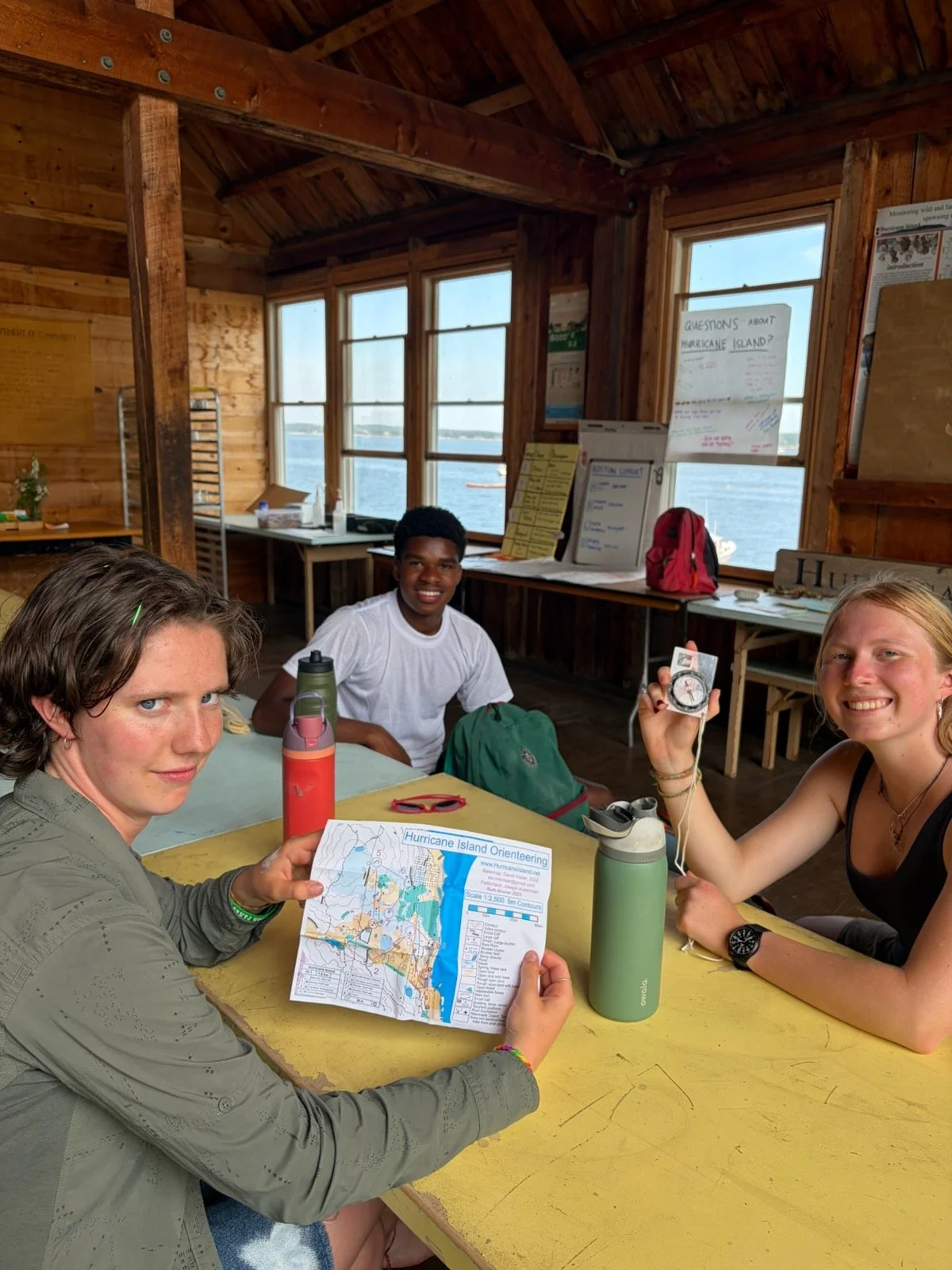
Warm weather brings warm faces. Three high school interns from the Brooks School made their way through the Hurricane Island community early this summer, lending a helping hand and an excited spirit. The Brooks School has a professional summer internship program: Students on the Forefront. It opens doors for rising seniors to explore career paths through direct experience. On Hurricane Island, Alder, Kevin, and Phoebe dipped their toes into the ocean of marine science and sustainability work. For Lead Educator Claire, who coordinated the students' schedules, the goal was to “learn about the island, the sustainability needs to live on an island like Hurricane, and [to] get some career exploration… specifically in aquaculture and marine sciences”, Claire said.
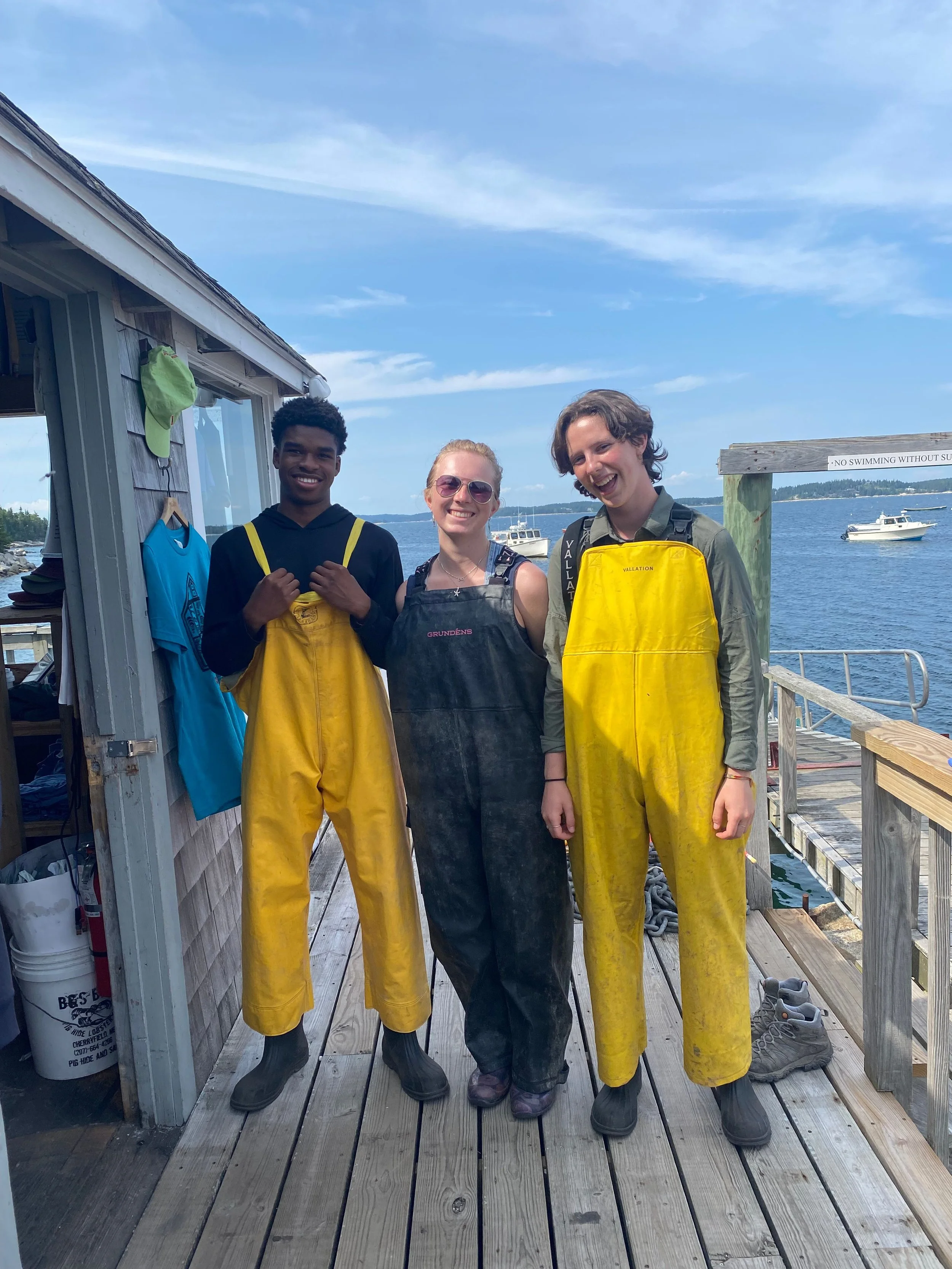
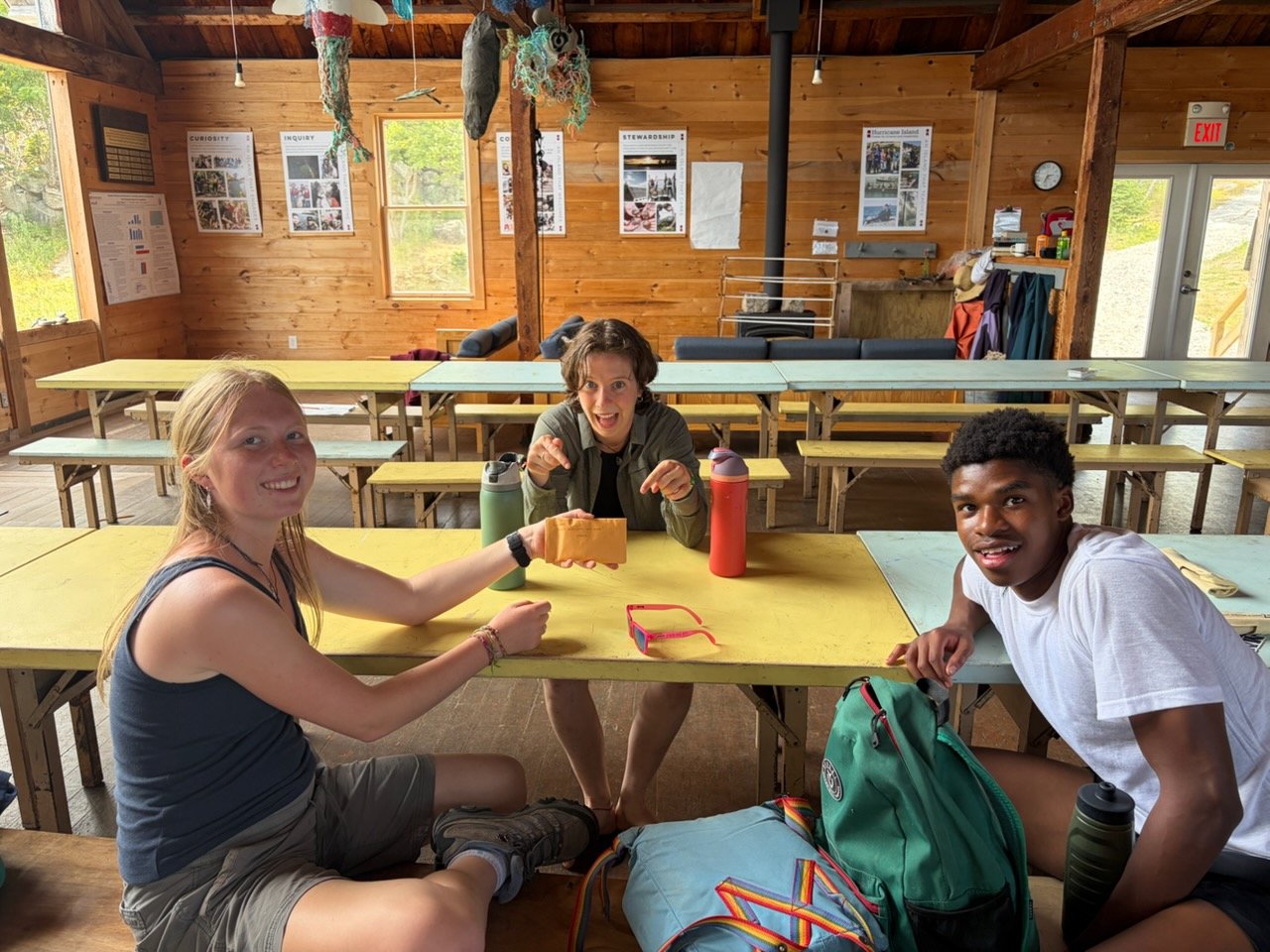
From left: Kevin, Alder, and Phoebe ready to powerwash.

The Brooks students rotated through nearly every corner of Hurricane Island’s operation. They tended to the garden, worked with the facilities team, helped the galley, and visited the aquaculture farm with the research team. 

Alder had interests in marine biology and ornithology, making Hurricane Island immediately stand out among the internship options. "It sounded like the perfect opportunity," she said. "I've always been an avid fan of nature."

Not only did she engage with her interests, but she left with an understanding of sustainability. "It's hard to be entirely sustainable," Alder reflected. "I think Hurricane definitely does a really good job of that."

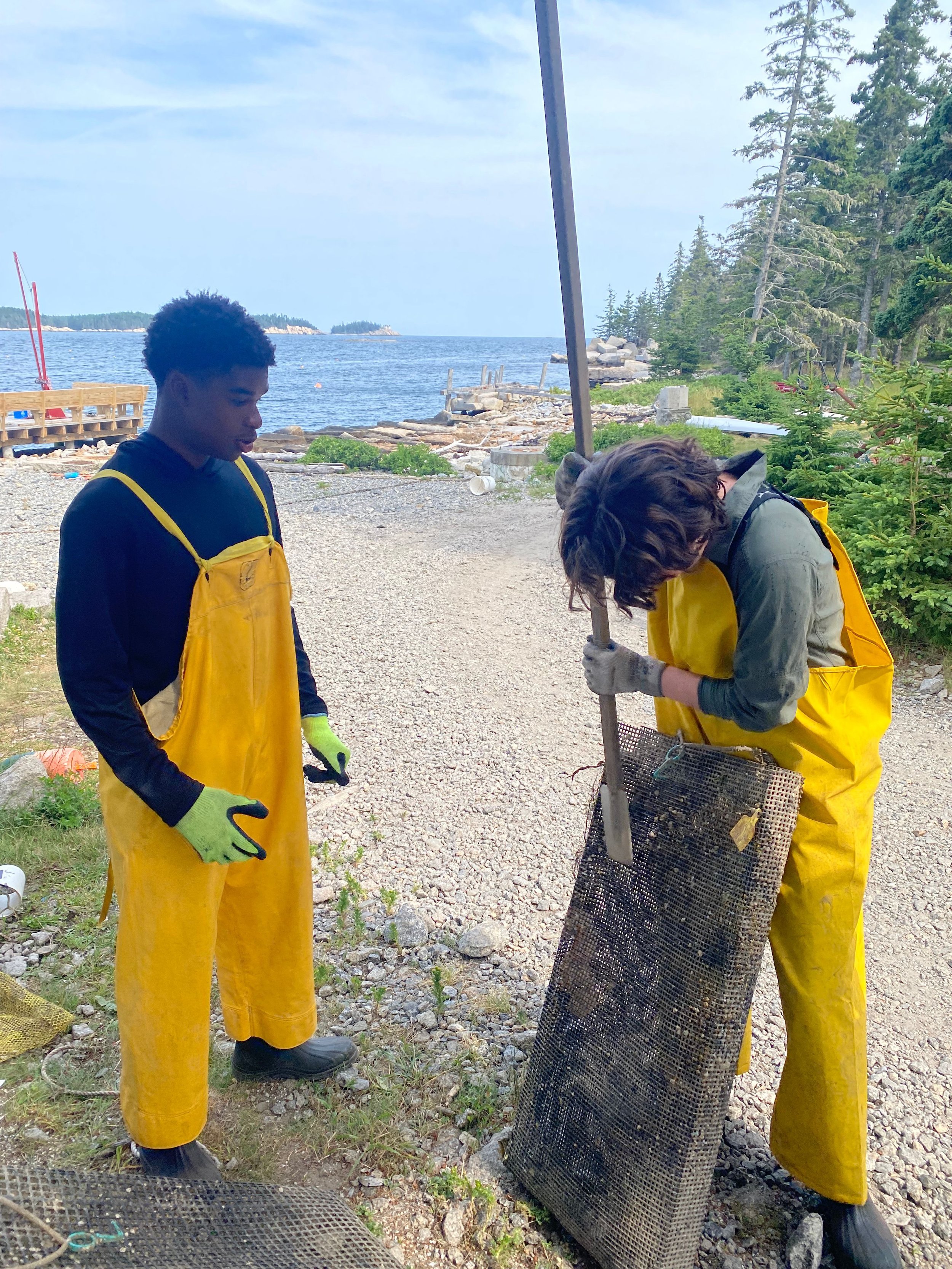
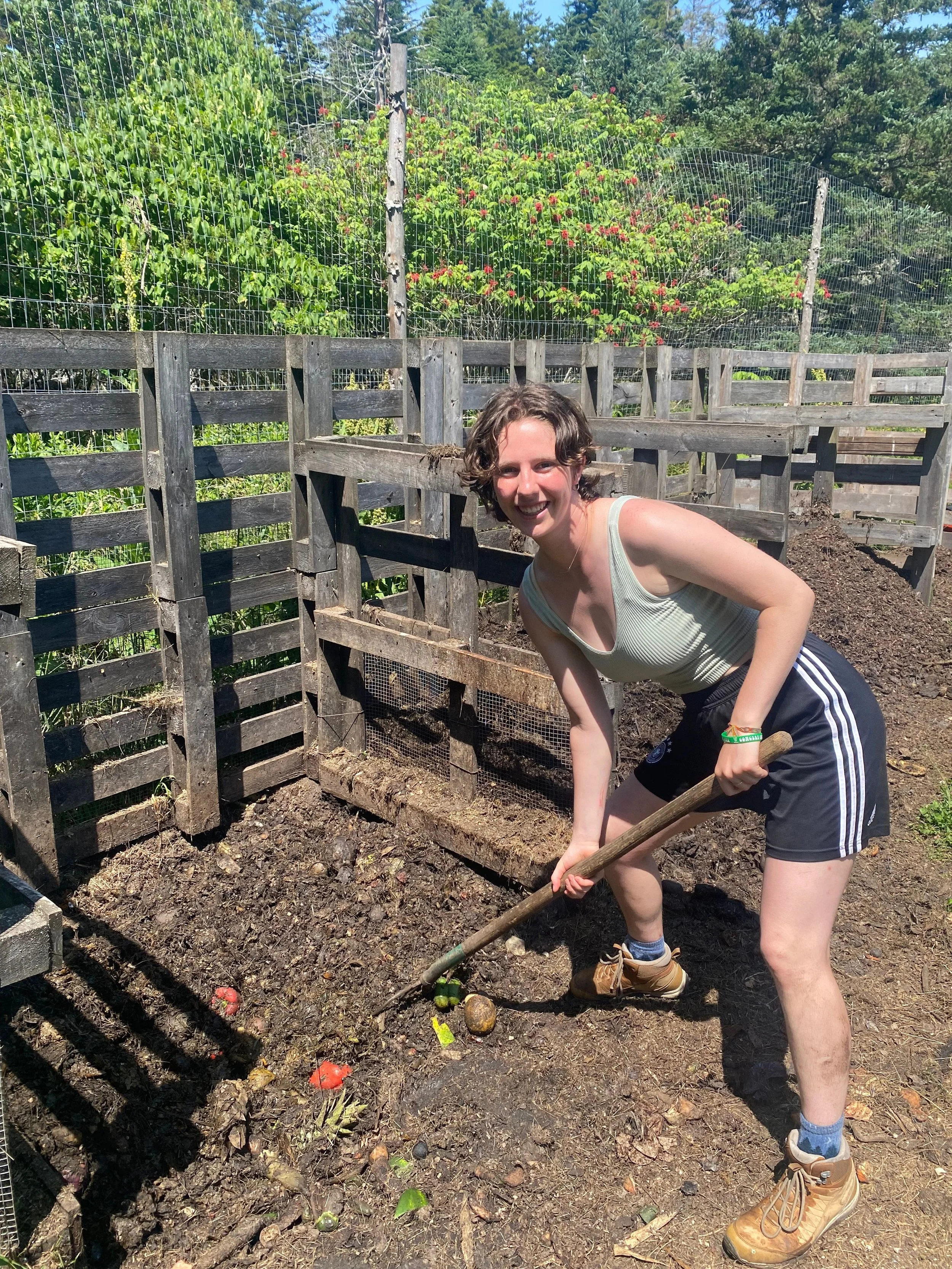
Learning and living on an island makes sustainability tangible. Instead of sitting in classrooms talking about environmental responsibility, the Brooks students experienced it firsthand. Hurricane Island uses sustainable systems which include composting toilets, greywater marsh applications, lithium-ion battery use, and food waste management. The Brooks students tracked food waste with the kids after meals, helped clear waste from the outhouses with the facilities team, and cleaned the biofouling from the aquaculture farm nets. "The things that I don't think about at home are the things we think about here," Phoebe said. Those everyday responsibilities became important lessons in stewardship and environmentalism.
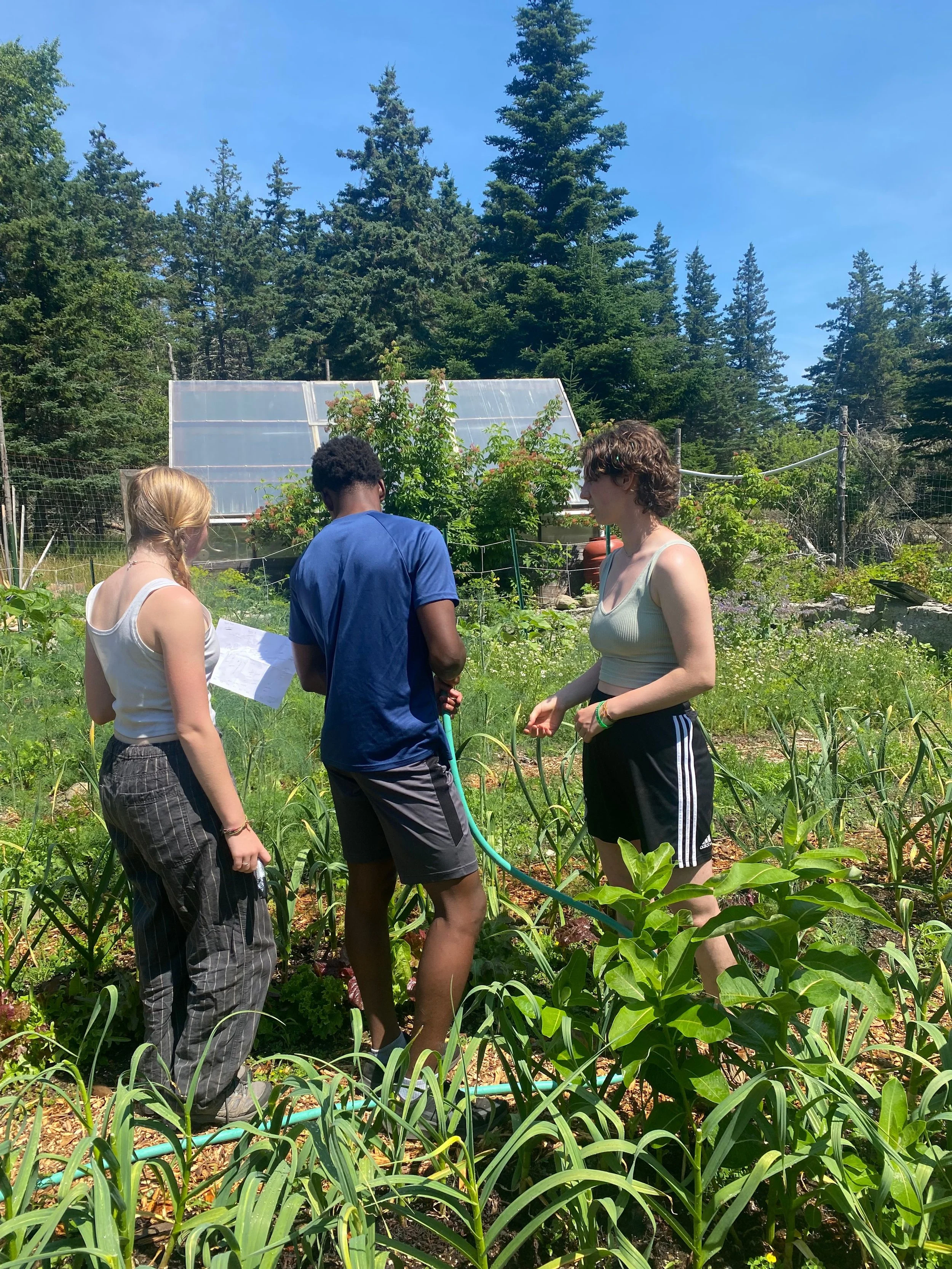
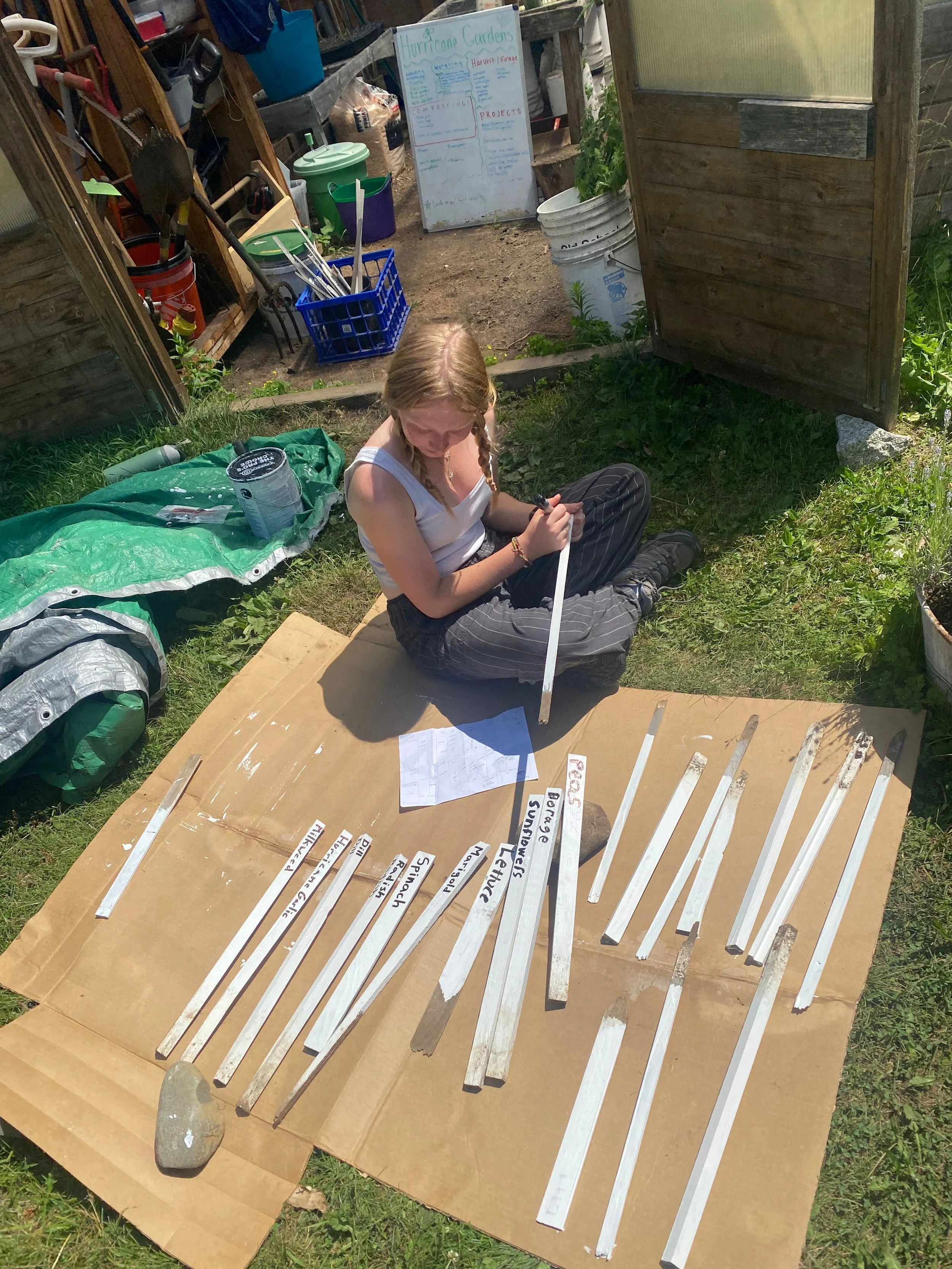
Taking care of the garden under the guidance of Briar, Hurricane Island’s garden educator.

Kevin found himself more conscious of human impact from everyday activities. "Living on Hurricane for these past two weeks has…made me more aware of how much can be done to save energy, to recycle, and save water,” he said. 

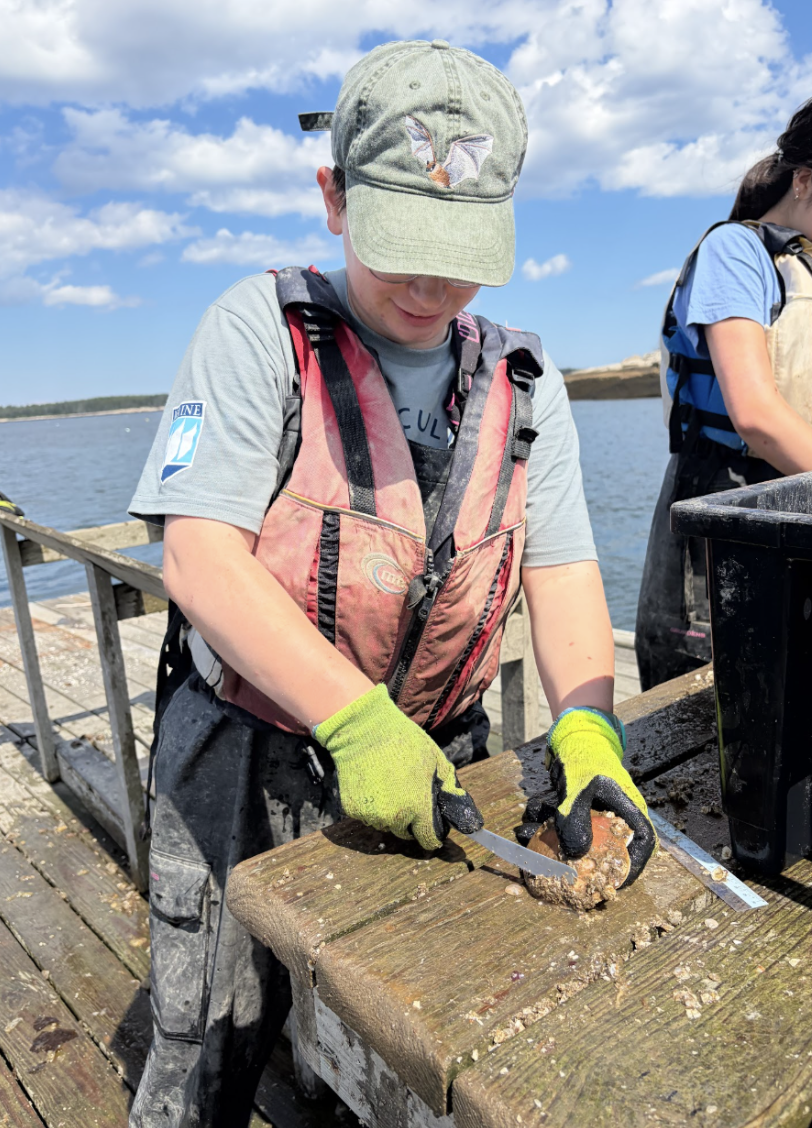
Kevin recounted working with the aquaculture team, where he helped clean and sort scallops and oysters. Hurricane Island utilizes a 3.2-acre aquaculture farm for ongoing research of these bivalves. Recent efforts include scallop handling methods research and growth monitoring. "I got to see how data is tracked on them… I think that will always stick with me." Only time will tell when Kevin comes across another scallop or oyster. What is certain, though, is that he will see beyond the shell to the research, care, and stewardship that supports the knowledge behind these bivalves.

An unexpected lesson was in community, something Phoebe found just as valuable as the scientific knowledge she gained. Living and working alongside Hurricane Island staff showed her what it looks like when everyone contributes toward a shared purpose. "I feel like I've learned the most from just the people here," she said. "Everyone's here for the same purpose. Everyone wants to contribute all the time and help each other out." This highlights the essence of island living experienced on Hurricane Island that is unlike any other. 

Because there were only three students, Claire was able to tailor the internship around their interests. A trip to Seal Island resulted, where the students observed puffins and other seabirds in their natural habitat. The excursion became one of the highlights of Alder’s time on Hurricane. "I love going bird watching on boats," she said, referring back to her ornithology interests. 

Phoebe thought back to what education looks like for her. "There's so many things where I'm like, 'Wow, I never would have learned this in a classroom,'" she said. That kind of experiential learning is exactly what Hurricane Island hopes students of all ages take away. 

"It was super great to have them," Claire said. "They were always happy to jump right into anything, and I think that really fits the culture of Hurricane."

As the internship came to an end, each student carried home something different. Whether it be new scientific knowledge, leadership skills, career inspiration, or a stronger sense of community, together, their experiences reflected the power of experiential learning. 

For future learners on Hurricane, the Brooks students have left surprisingly consistent advice: Come ready to work, stay curious, and don’t be afraid to get your hands dirty.
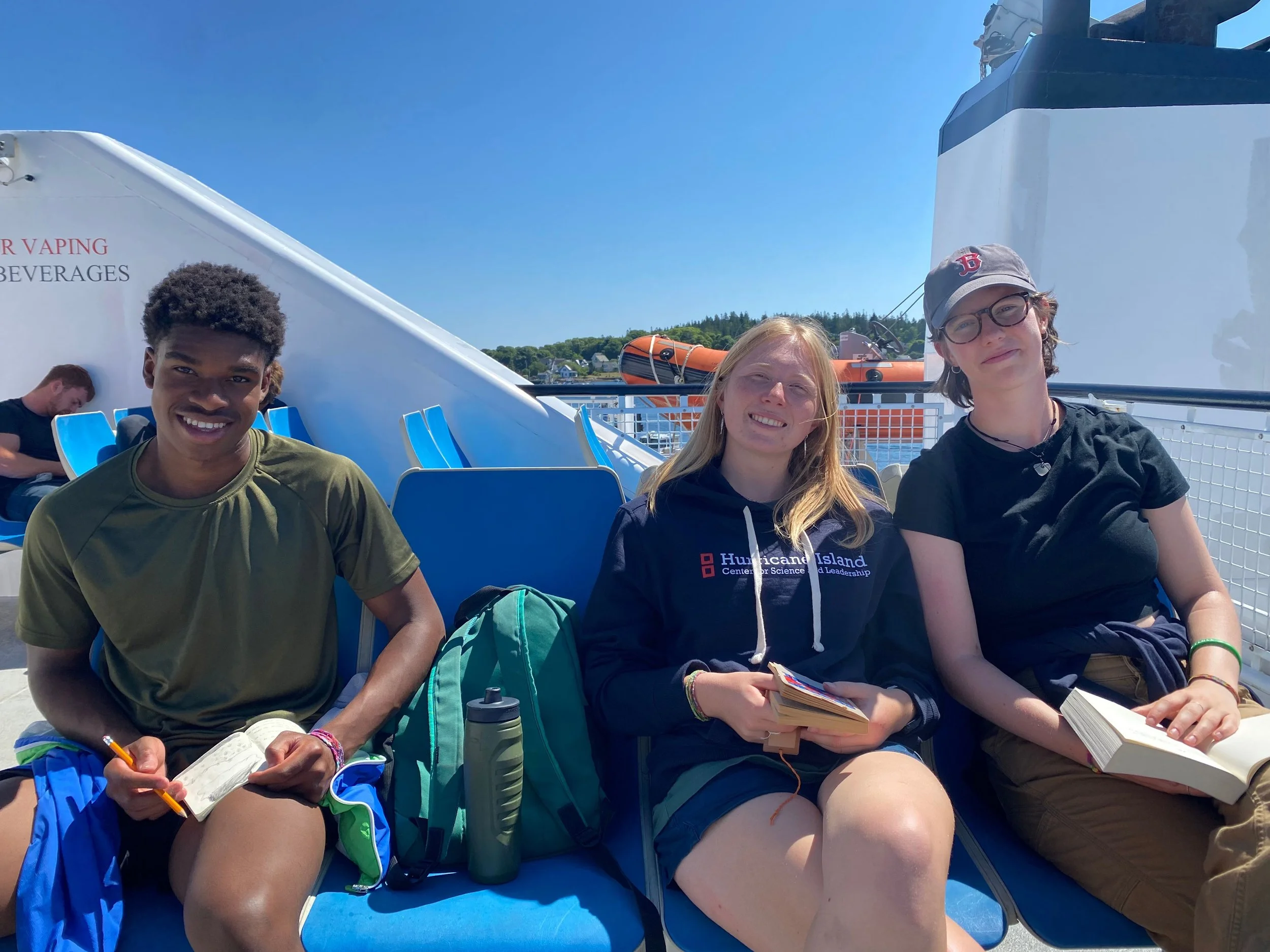
Kevin, Alder, and Phoebe leaving the island as changed learners. 
Subscribe in a reader

Letters from Hurricane Island: Kate Murphy, 2026 Aqueous Fellow

Kate Murphy (she/her)

Aqueous Fellow

McGill University

Hi Everyone! I’m Kate, and I am a rising senior at McGill University in Montreal, Quebec. This summer, I am working on Hurricane Island as part of the Aquaculture Research Institute’s Aquaculture Experiential Opportunities for Undergraduate Students Fellowship. 

As part of the AqEOUS fellowship, I am completing a research project that utilizes the two-eyed seeing framework to investigate the impact of handling practices on the health of sea scallops within scallop aquaculture. My study aims to better understand how environmental exposure affects scallops' feeding capacity and metabolic health. To do this, I am hoping to look at how sea scallops' filtration rate changes when exposed to various environmental stressors. With sea scallops from Hurricane Island’s experimental lease and our new field research station’s flowing seawater laboratory, I am working to develop a methodology that can help increase the understanding of sea scallops' care needs. 

Now, more than halfway through my time here at Hurricane, I can confidently say I have learned more about scallops than I ever thought I would, and I have definitely grown a fondness for the bivalve. This opportunity to gain a deeper understanding of scallop aquaculture has been truly wonderful. A way I have tried to better cultivate my understanding is by conversing with different aquaculture farmers throughout Maine about their experiences. It’s been super interesting to learn more about different farming practices and gain insight into the development of Maine’s working waters. Through these conversations, it’s become clear to me that aquaculture, especially scallop aquaculture, has great potential to elicit a reciprocal relationship between Maine’s people and its environment.

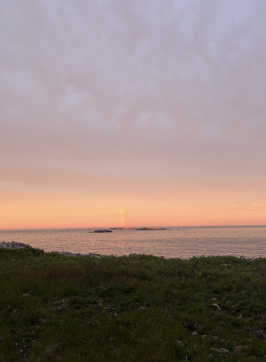
Sunset rainbow from the south end of the island

This last note is part of the reason I am so grateful to have this opportunity to work and learn on Hurricane Island this summer. Fortunate to have grown up visiting Midcoast Maine, I’ve gained a deep appreciation for the area. Living on Hurricane has helped me gain a whole new perspective on the place I grew up visiting and affirmed my goal for a future in marine science. I’m excited to see what insight my final project can provide and look forward to soaking up my last few weeks on the Island. 

Cheers,
Kate Murphy

Subscribe in a reader

Letters from Hurricane Island: Cyprus Whitaker, 2026 Aqueous Fellow

Cyprus Whitaker (they/he)

Aqueous Fellow

Oregon State University (Major: Environmental Science, Minor: Sociology)

Welcome to Hurricane Island!

I’m here at Hurricane Island as an Aqueous Fellow, which is a program through University of Maine that merges Indigenous Science with Aquaculture research. As soon as I heard that one of the Aqueous projects was on Hurricane Island, I jumped at the opportunity. I came to Hurricane Island to learn more about aquaculture, spend time outside, and be a part of the amazing community here. Already, I’m having an amazing time whether I’m elbows deep in a lantern net or teaching students.

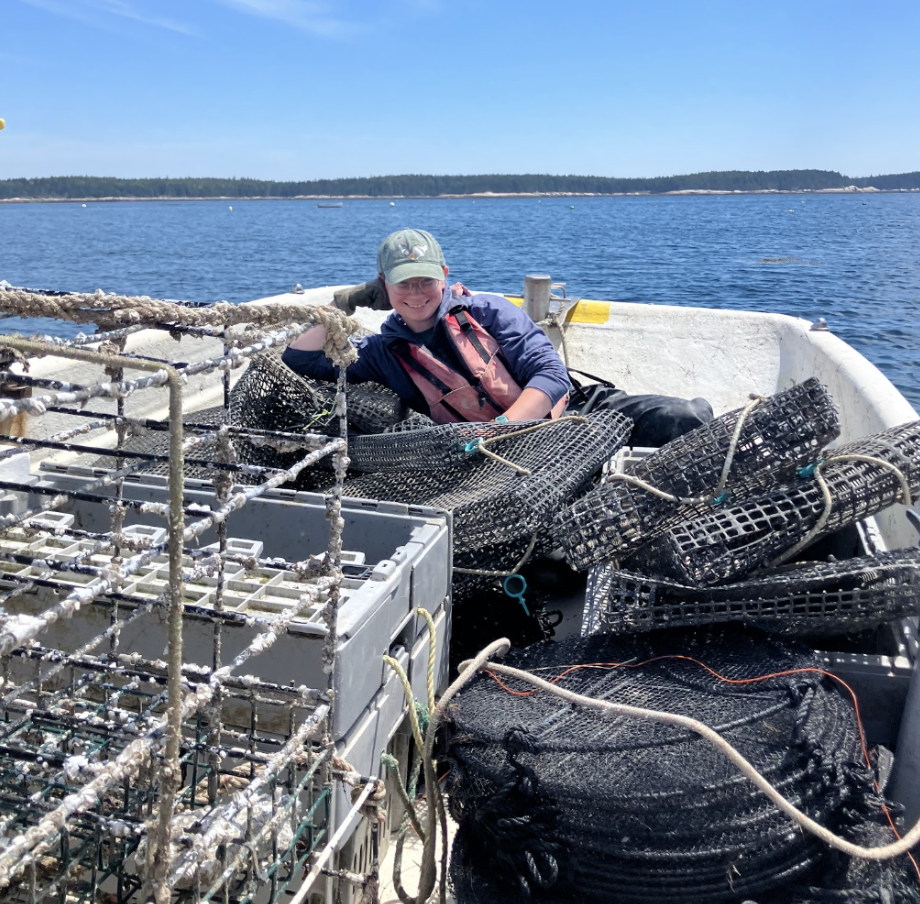
Cleaning scallops on the farm

I’m designing a two-eyed seeing curriculum that challenges students to consider both indigenous knowledge and western science when thinking about environmental solutions. I also run spat bag lessons where students dig through a spat bag for juvenile scallops, identifying interesting organisms and contributing towards a broader community science project. I’ve been shadowing existing lessons on Hurricane Island and doing my own research to create a hands-on lesson plan.

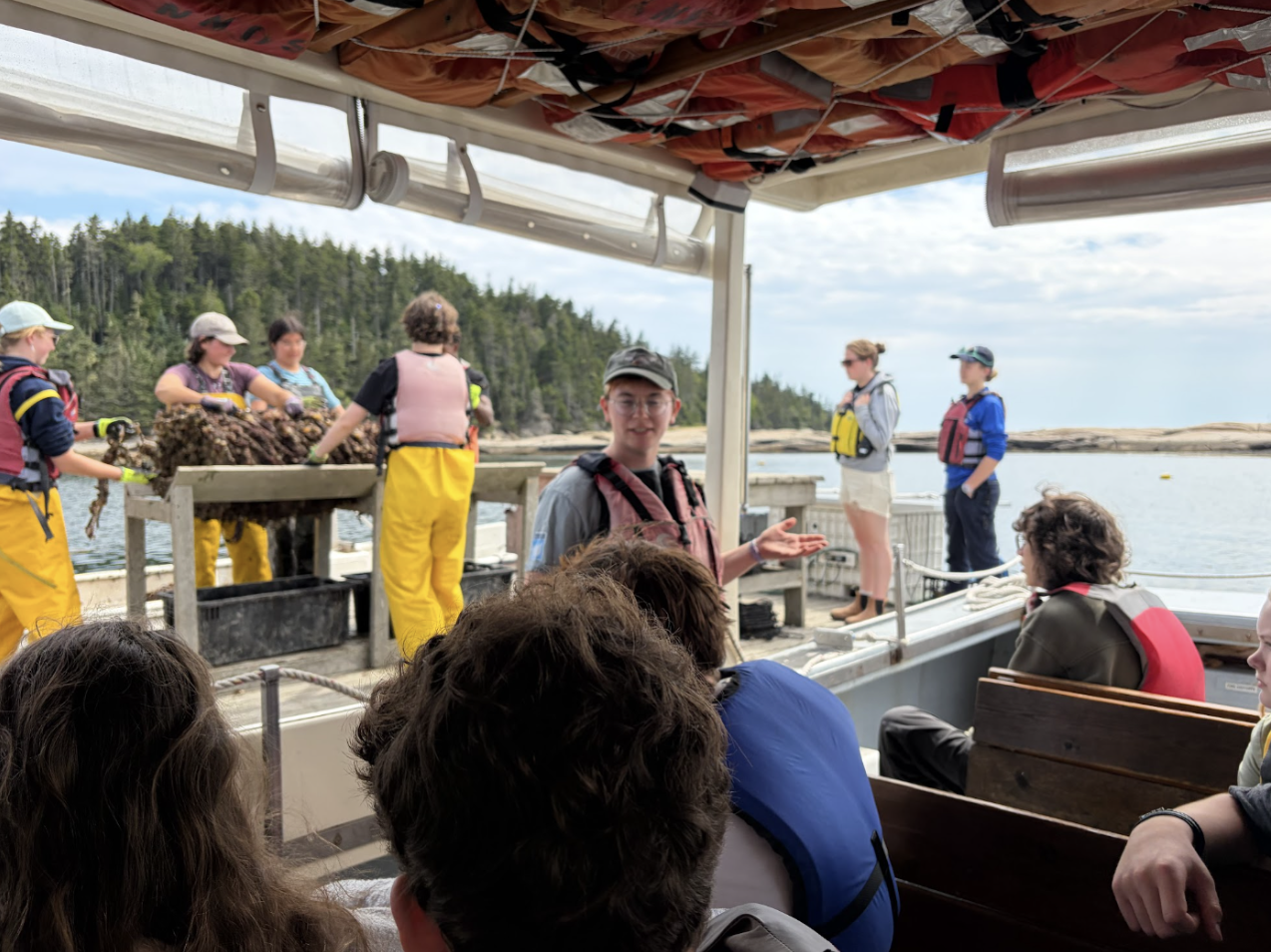
Here I am teaching students about the scallop farm

I love the ocean and learning about all the fascinating creatures right off our coast. I want to be a part of teaching the next generation of scientists, policy makers, and leaders that change the world. Being here on Hurricane Island, I feel that I’m able to make a difference teaching students about the wonders of the ocean and aquaculture!

Best fishes, 

Cyprus

Subscribe in a reader

Letters from Hurricane Island: Kazumi Haag, 2026 Research Intern

Kazumi Haag (she/her)

Bates College Research Intern (Major: Environmental Studies & Political Science)

Greetings from Hurricane on a lovely foggy morning! 

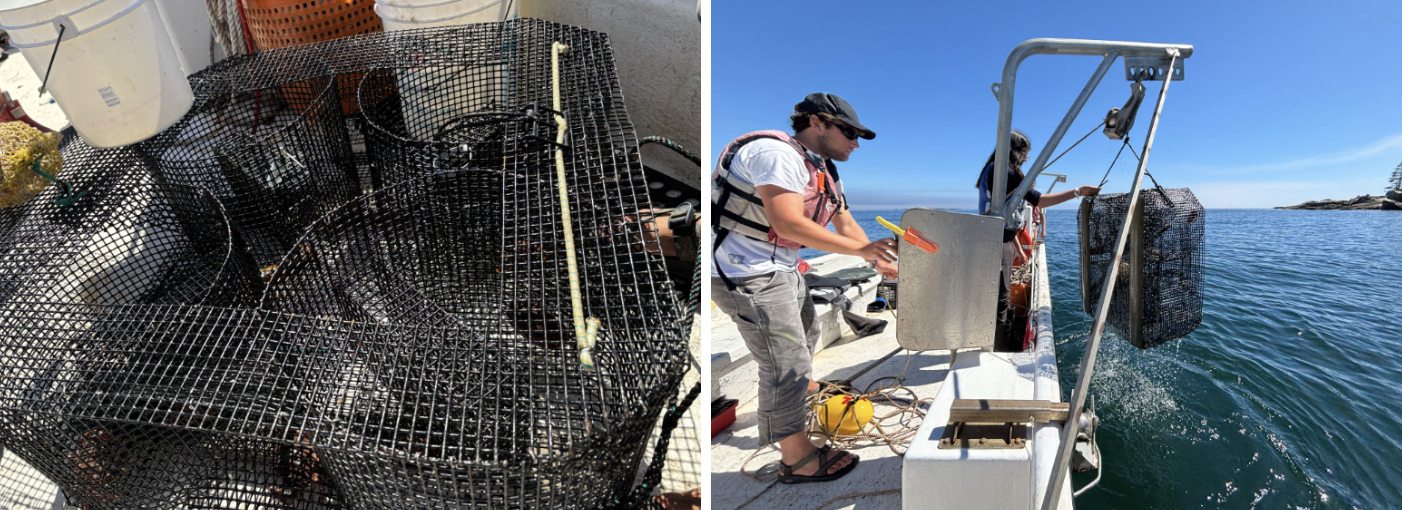
This summer on Hurricane, I am working on an early benthic phase lobster trapping project that centers on young lobster populations off our shores. If all goes to plan, we will catch lobsters that are between 20 and 60 millimeters in four traps that we have set up in Gaston’s Cove, in deeper and shallower waters. These are a new trap design. We hope to further the work that began in New Hampshire with collaborators recently to help find out more about lobsters! 

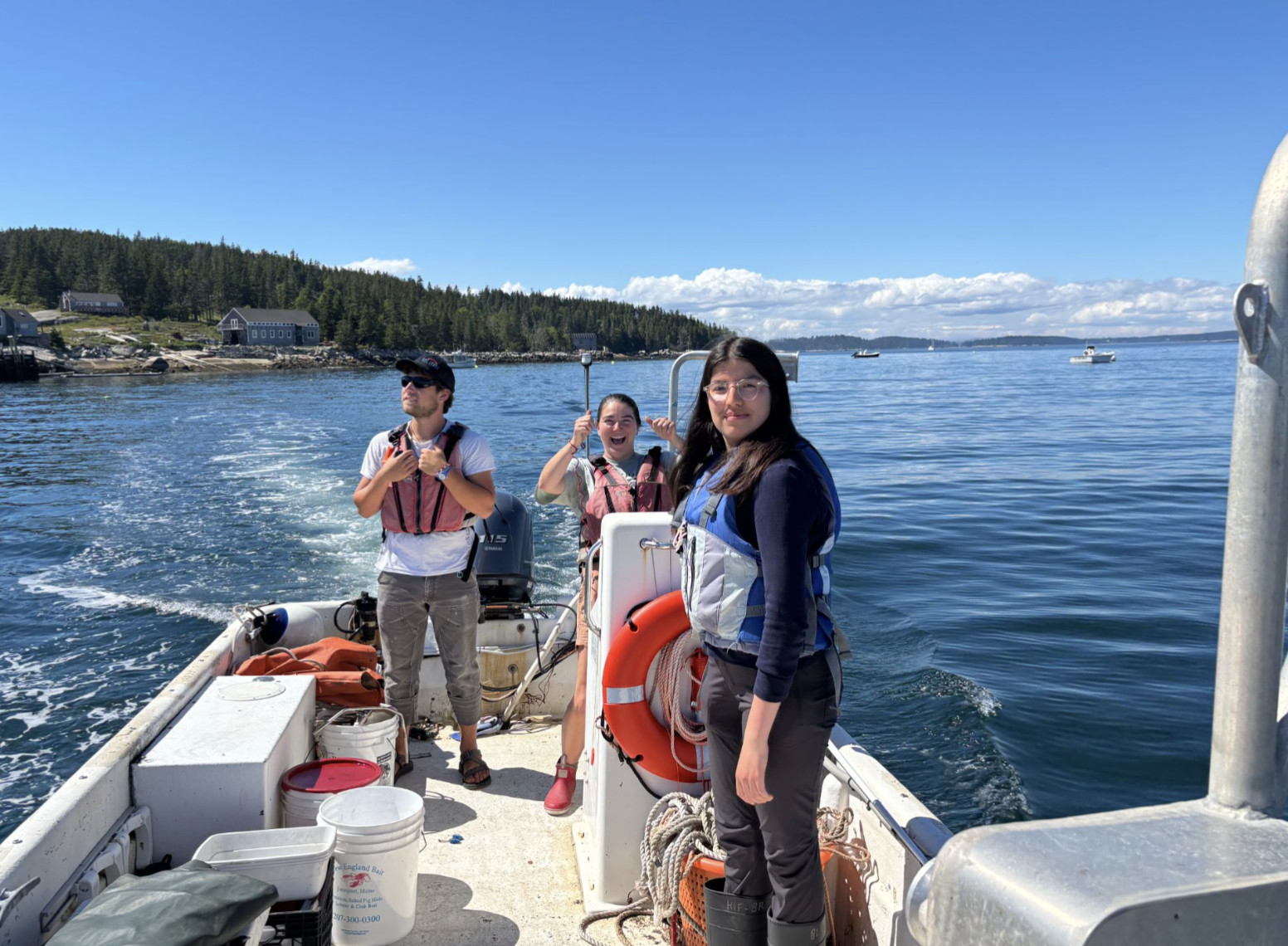
Madison, Noah, and Kazumi on the Skiff going out to haul traps

I am two years into college and have not spent much time with lobsters thus far in terms of doing research on them. Don’t get me wrong, crabs and mollusks are super cool, but studying a crustacean that is so key for Maine is an amazing opportunity! Just last week, we set up all of the traps and this week we are beginning to sample them for lobsters and other creatures. I am not only looking forward to what we find and to working with lobsters, but also learning more about lobster ecology and anatomy!

  Lobster trap (left) and Noah & Kazumi hauling up a trap onto the deck to collect data (right)

I have only been on Hurricane Island for a week, but I already realize how unique it is and how much of a community culture exists here. I chose to come to Hurricane this summer when my professor and major advisor, Dr. Justin Baumann, who sometimes does research here, mentioned it to us in class. I hopped on Zoom for an info session with Will and Madison, and I was hooked! Here on the island, I love swimming or being out at the aquaculture farm, hiking to Sunset Rock, and chatting with friends overlooking the wonders in Hurricane Sound and Penobscot Bay! 

Keeping calm and lobstering on, 

Kazumi

Subscribe in a reader