Island Updates

WoW - What a Program

Written by educator, Isabelle Holt

It was my immense pleasure to be the educator on Women of Water (WoW) this year! An intrepid crew of ten high school aged women from up and down the east coast, a teaching assistant (Anna Bateman), and I embarked on a two week adventure that took us from exploring Hurricane Island to circumnavigating the Fox Island archipelago aboard the Boyd N. Sheppard.

Unlike most Hurricane open enrollment programs WoW is single gender - only female identifying students are accepted and enrolled. As a graduate of a women’s college I had been itching to lead an all-female trip for the past two years. I saw first hand during my undergraduate degree in Biology how transformational and empowering learning in a single gender environment - especially in fields such as STEM and nautical science that are traditionally dominated by men- can be for women. I saw this again a hundred fold in our WoW students. 

One of the highlights of our ten days on Hurricane Island was an after dinner speaker series, which we dubbed Women of Hurricane or WoH, where different female identifying members of our community came to talk to the students about their lives and paths to where they are today. Each speaker was asked to reflect on four questions: 1) Why do you do what you do? 2) How did you get here? 3) How do you think identifying as a woman has influenced your approach to your life and work?  And 4) What do you want to do when you grow up? By sharing our stories with the students, the students were able to resonate with us as well as feel more comfortable sharing their own thoughts and ambitions. 

Another exciting feature of this program was how often we were able to deploy our Sea Rocket, an underwater ocean exploration tool developed by HAWX Open Ocean. The Sea Rocket works via a fairly simple mechanism. You attach a weighted bag to the bottom of the rocket itself so that when the bag hits the bottom it is released and the rocket floats back up to the top of the water column where it can be manually retrieved. By mounting a gopro and flashlight on the bottom of the sea rocket you can see exactly what is happening on the ocean floor, what wildlife is present, and what substrate you are above. We were lucky enough to be able to use the Sea Rocket both while we were on Hurricane as well as while we were aboard the boat.  

Sailing on the Boyd N. Sheppard was truly a dream come true for me. Built in 1886 as an Oyster freighter, the Boyd N. Sheppard is a two masted, gaff rigged, schooner. While we were on the boat the students rotated through different watch stations: scullery, navigation, and deck watch. In the scullery, the students were helping our star chef, Adam, cook on an old fashioned wood fired cook stove, putting out three meals a day plus various baked treats that never ceased to amaze. The students on navigation watch were in charge of charting our course for the day using a chart of the Fox Islands and the process of dead reckoning, in which you determine your position using various fixed points such as marine navigational aids and your estimated speed over time to figure out where you are as well as where you are headed. The students on deck watch each day were in charge of actually sailing the boat: hauling anchor, setting sails, and managing all of our tacks and gybes. On our last day of sailing aboard the Boyd N. Sheppard the students ran the show completely as the educators and professional crew stepped back. Each student took the helm (steering wheel) of the boat for one nautical mile as they sailed us from Rockland back to North Haven and then back to Rockland again.

For me, WoW will remain a program to remember - the growth, determination, and openness shown by our wonderful group of students was extraordinary. Here’s to many more years of being WoWed by our wonderful young women!


Subscribe in a reader

Penobscot Bay Leadership Program

Written by Carolina Hutt-Sierra

PBLP! What a GROUP! The PBLP boys were a fantastic addition to the Hurricane community and while they were only on the island for four full days, their bright and hilarious presence was felt long after they sailed away. The Penobscot Bay Leadership Program is unique in its emphasis on leadership and taking responsibility for one’s actions as well as one’s role within a larger group. Lilla and I found ourselves continuously impressed as the days passed by and we were able to watch the boys interact with each other and the Hurricane community in a mature and kind manner that far surpassed their years. In particular, I loved watching the boys step into the position of “captain of the day.” In this role an individual boy was placed in charge of leading his “crew” each day (i.e. making sure things were never left behind, keeping the group on schedule, etc.). 

The group was full of energy and spirits remained high and cheerful over the course of the four days. From rock climbing around the old quarry walls and rowing (with our eyes closed!) around the Hurricane sound to waking up early each morning to run a mile and jump into the ocean, the days were packed with activity and energy. After the long days, the PBLP crew was able to slow it down each evening before dinner when the group headed out for an hour of “sit pot.” Hiking to a different location each day, we spent the hour spread out across the island’s coast, sitting in silence and reflecting on the day while admiring the water in front of us. This time for reflection would continue later in the night, as well, when we gathered for an evening meeting in which we would discuss the highs and lows of the day as well as areas in which we were proud of ourselves and each other as well as areas in which we hoped to improve. The group sailed out of Hurricane Monday morning and we already miss their laughter and pizazz here on the island! 


Subscribe in a reader

Engineers and Tinkers

Middle School Marine Biology Blog, written by Madison Maier

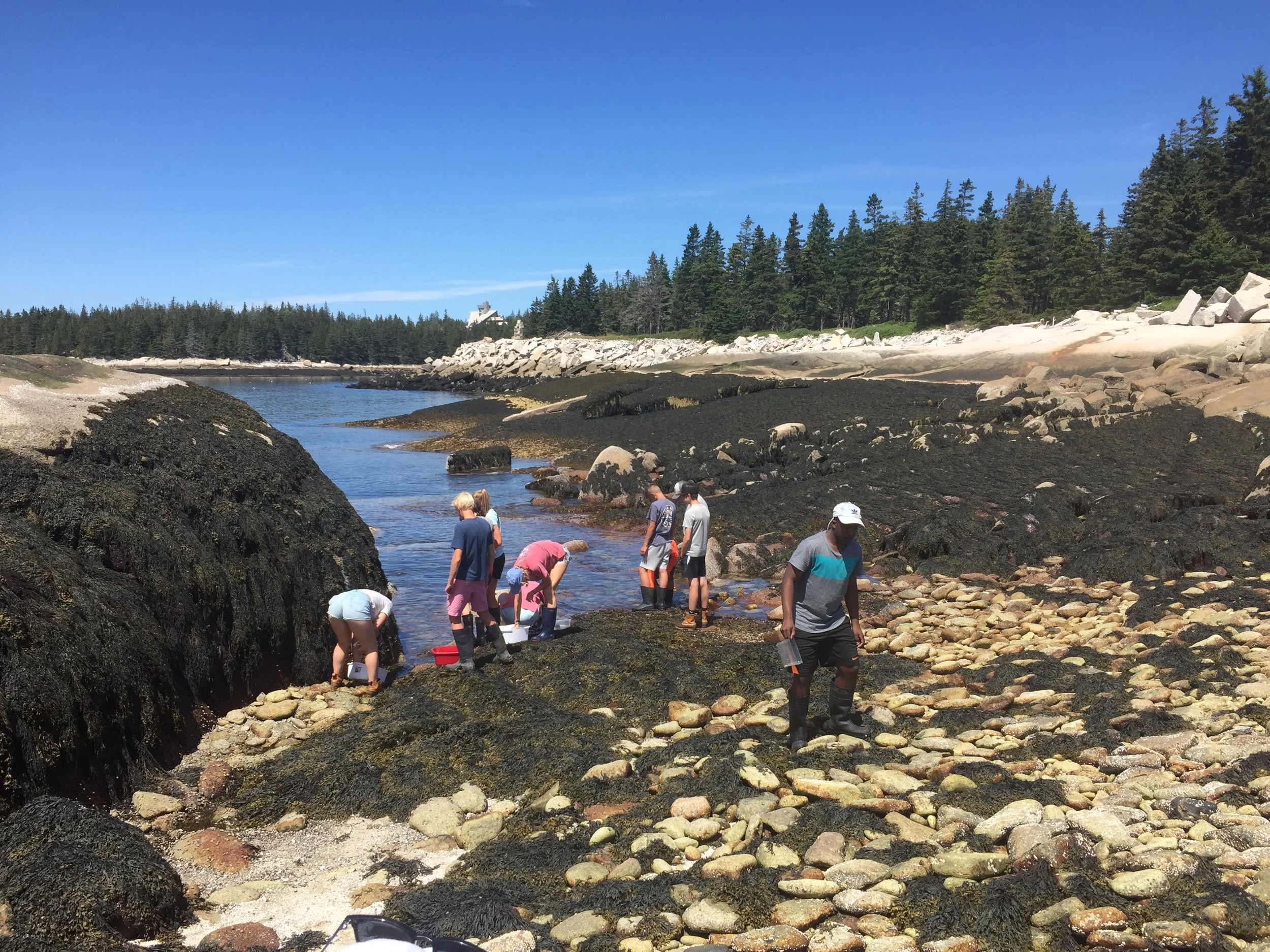
Middle School Marine Biology took the island by storm.  For the first half of the week, we started our days with some exploration of the rocky intertidal zone.  During that time we learned how to identify some of the more common critters and talked about their adaptations that allow them to survive in the harsh and ever-changing intertidal zone.  We then put our knowledge to the test by designing some of our own animals that are could live in the intertidal zone. 

Although Francois Jacob once described evolution as a “tinker, not an engineer” we decided to throw that concept out the window.  Many of the organisms were inspired by existing creatures (and therefore, it could be argued that they could, maybe, in some parallel universe emerge from natural selection).  But, in general, we tended to think a little larger and engineer our own original ideas that some might call “biologically improbable” (I refuse to use the word impossible, just in case I am proved wrong one day). 

Each student needed to name their creature, invent one behavioral adaptation and three physical adaptations that would allow them to live in the intertidal zone, and identify which existing intertidal creatures would be the predators and which would be the prey of the newly-designed organisms. 

On our last day, we presented our creations to a full house consisting of the staff and the Women of Water, a high school program that we were sharing the island with.  It was a rousing success. I had staff and participants coming up to me the rest of the day, complementing our work and the craftsmanship that went into each presentation.  But, I’ll let you all see for yourself.  


Subscribe in a reader

Adventures in Art: Changing how we view and experience the island

It is guaranteed that things change on Hurricane island. The granite itself wears with time and tides, organisms migrate, move, grow and die, and people come and go, taking their memories with them and leaving parts of their heart behind. This year one of my favorite changes was the addition of our Middle School Adventure Art program, bringing eight vibrant young women to our shores and into the fabric of the Island’s life. The program was led by local artist and educator Laura Freeman, who helped us all see the island, its environments, and its inhabitants with new eyes and through new mediums. While the students had a variety of ‘traditional’ island experiences, they also forged new paths through print making, natural sculpture, scientific illustration, painting, and even turned their ‘art debris’ into high fashion. Their connection to this place was rooted in seeing and experiencing the island more deeply than any other group of middle school students has done before through the sheer amount of time they had to just immerse themselves in the place and notice/focus on details that most pass on by. This may make it sound like the group was reserved and demure… but of course that wouldn’t do justice to the goofy and energetic fun they brought to the island. I have never had a more surreal experience on the island than when the girls helped me find my ‘true laugh’ (if you haven’t experienced it, just google it…. doubt it… try it… and then spend the rest of your time trying to figure out a better name for it and wanting to know the science behind it - or maybe that is just my reaction!). I feel so fortunate that I got to work with these girls last week and I loved the conversations with them about what course they are coming back and doing in the future. I’m just glad Laura and I have a year to save up our energy before we do it again! Even when they come back or when we run this program again, there will be plenty of changes based on who is part of the program, adaptations we make based on feedback from the week, the shifting and deepening passions of the people involved in instructing, and of course the changes in the island itself. Despite those things, looking back on our time together there is nothing I would change for the world except getting more time with such a wonderful cohort.

Subscribe in a reader

What is an Island?

Middle School Island Ecology Blog

Written by Educator Kat Duvall

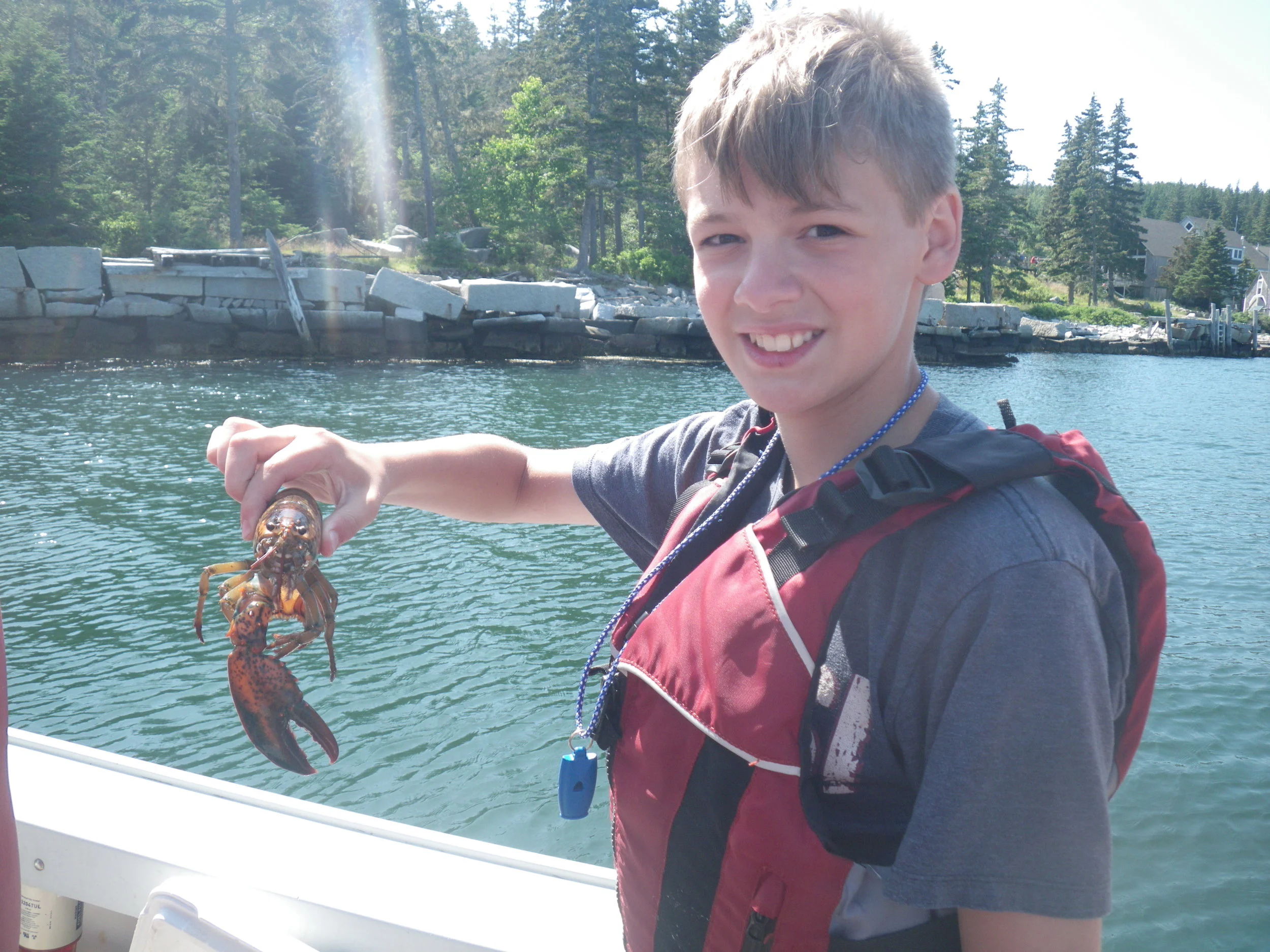
Students from Middle School Island Ecology took the island by force. Their collective energy was astounding; all of it positive and some of it just a tad rowdy. As a program we participated in all of the Hurricane staples: lobstering, aquaculture lessons, rock climbing, hiking, jumping off the pier into frigid waters, and sit spots. We played games upon games; Llama Llama, Silent Football, and Where's My Chicken? Someone even brought a kazoo! It was happy mayhem, made even better by the sunny weather we enjoyed all week.

For their project, students were tasked with thinking about what it means to be an ecological island using parts of the island biogeographical theory as a baseline. We asked them to think beyond a traditional "land surrounded by water" definition of an island, and talked collectively about what it might mean to consider Central Park in New York City an island. Students paired up to choose what ecological island they wanted to focus on, think about why they considered it an island, and build the food web associated with it. They presented to the rest of the HICSL staff and the Middle School Adventure Art program on topics like Caves, Tropical Coral Reefs, Lakes, and Ice Caps. It was impressive to observe their commitment and creativity to the project, and it went as well as we could ever have hoped! This was a tremendous group of kids and we hope to see them come back in later years.

Subscribe in a reader

Climate Change, Our Oceans, and Hope!

High School Marine Biology Blog

Written by Teaching Assistant, Anna Bateman

What an exciting week of exploration and scientific inquiry we had with our High School Marine Biology students! The week was themed around climate change and our role as scientists and citizens in the world. We drew connections across all aspects of life on Hurricane to sustainable living and combating climate change.

We had an excellent visit to the Aquaculture site and research intern, Hallie, guided our students through our kelp and scallop farming. During this, along with our lobstering adventure, students were able to connect warming oceans and changing ecosystems with the potential economic impacts on Maine.

In teams, we investigated the impacts of climate change on Hurricane Island specifically. Using Stadia rods, we mapped sea level rise on our shores. We learned that 2 meters of sea level rise would turn our water source, the Quarry, into brackish water. This would have drastic impacts on the ability of people like us to be able to live and learn on Hurricane in the future.

We then put on our chef hats and cooked with kelp (not all enjoyed the end product, but much fun was had in the process!). We talked about the growing prevalence of kelp and other seaweeds in our diet because of their efficiency as a carbon sink. The students were eager to share their dishes (kelp chips, kelp salad, and Irish sea moss pudding) with the rest of the Hurricane community at dinner that night!

Throughout the week, we spent several hours exploring and conducting research in the Intertidal Zone. Each student came up with their own research question and designed a project. Using transects and quadrats, the students were able to get a feel for the field work at the heart of many scientific disciplines and then created a poster to present to all the Hurricane staff. During the project, students were encouraged to continuously return to the question, “Why do we, as marine biologists, care about climate change?”

We concluded the week with a long discussion about climate change solutions and how we can all get involved. Students were open about their feelings of pessimism and it was incredible to watch them inspire each other by emphasizing the importance of change at all levels in many different ways. The final morning, each student shared an action item they were bringing home with them. It was such a hopeful note to end on and I am so confident in their ability to go make change. The future is in good hands!

Subscribe in a reader

Connectivity and Contemplation

High School Island Ecology Blog

Written by Educator, Lilla Fortunoff

A few days into our High School Island Ecology program, I asked a student, “Does hunting count as foraging?”

“Yes.”

“Ok.. Why?”

“I knew you were going to say that!”

To the credit of this student, that was maybe the 58th time that Carolina (my co-educator) and I had asked one of our 10 students to explain their thinking to the group, and it was only Wednesday. Trying to encourage students to go deeper into their thought process is important for multiple reasons - it forces them to either strengthen the conviction of their knowledge or opinion with evidence or explanation, or it helps to uncover the questions they may still have about a topic. Asking why over and over again can wear on the patience of the group, but it allows what would have been a two sentence interaction to turn into a complex discussion amongst all the students about their ideas on hunting and foraging. 

This tactic is one that Hurricane Island educators use a lot. We try to help our students make deep connections with the environments they are in and with their peers. We dive in. We learned how to use field guides by trial and error with Hurricane wildflowers first, then moved on to using field guides to forage (not hunt, we determined) for wild edible terrestrial and aquatic plants. We then flocked to the kitchen and prepared chocolate sea moss pudding using carrageenan from a marine algae. We find our food and eat it too. Deep.

In some ways, this goal of depth was futile from the start, especially during a one-week program called Island Ecology. There is so much ground to cover (literally!) in one week. Our students were incredibly flexible as we explored the island. We went from searching for intertidal organisms at the ocean’s edge at low tide to the forests at the highest point of the island (only 160 ft above sea level, but that’s beside the point) where we identified and counted tree species to calculate the biodiversity index of the natural community. We learned about the lobster industry on the Fifth Generation (our small lobster boat) in Hurricane Sound and dip netted the benthic muck in the Ice Pond for freshwater macroinvertebrates. We discovered that we can learn from these macroinvertebrates (lobsters are also technically a macroinvertebrate, albeit marine and not aquatic…) about the qualities of the water they inhabit. Lobsters are sensitive to ocean temperature and freshwater macroinvertebrates have varying sensitivities to pollution. One can make a basic assessment of freshwater quality based on the macroinvertebrates living in the body of water. We could have spent an entire day on this alone, an hour and a half of searching for and identifying macroinvertebrates did not give us very much information, although we did find a caddisfly larvae which is a species that is very sensitive to pollution in its environment so that’s a good sign! This was just one of the many connections we found over the week between different ecosystems on and around Hurricane Island. The students were full of their own questions and were patient as we experimented with different ways to understand the land and sea more fully and make connections between the things they were seeing and learning about. They were patient during our daily quiet solo time before dinner in which they were prompted to write reflectively and creatively in their journals. So many questions, so many connections, the week flew by and we on Hurricane are better for it.

Subscribe in a reader

Welcome to Texas

Written by Sustainability Engineer, Maeve Carlson

Sometimes it feels like the technical world is divided into those that thrive with the theoretical parts of design and those who just want to go out and build the dang thing. The “hands on” learners who want to cut it, drill it, attach it, trouble shoot it, re-cut it, re-attach it, and figure things out as they come up versus the “classroom” learners who would prefer to spend their time thinking through everything on paper before it ever comes into existence.  As a recent graduate of the University of Maine, I have learned that within my field of civil engineering you’ll definitely work with people who are on both sides of that divide. Part of me has always sort of wondered which type of technical brain I have & I recently got the opportunity to test it out…

I was pulled into a project here on Hurricane that already had a problem and solution pretty well defined. The problem was that the garden greenhouse was hot. With unreliable windows, and more importantly no air-flow, on sunny days the cracked thermometer would reach triple digits and the space would transition from a toasty incubator of baby plants to a sauna that the garden team affectionately termed “Texas”. The solution was simple- install a fan. What type of fan do you ask? Obviously a converted radiator cooling fan snagged from the inside of some vehicle that probably wasn’t going to miss it. So to reiterate: the project was to install a car fan into the greenhouse somewhere so it would get the air moving and maybe help with the whole Texas situation. My role was basically anything required to make that dream into a reality. 

I started by asking a bunch of questions (which is totally on-brand for me).  Some were big picture “what’s your vision” type of things for the garden team. Others I could answer myself with a measuring tape or quick Google search. As the design progressed, still others were for our facilities team about how to use a table saw or where I could find stuff in our shop.  Finally the “classroom” portion was done & it was time for the “hands on”. 

I’d say the instillation went pretty smoothly considering my complete lack of experience in essentially everything I was doing. I had LOTS of help, and managed to move the solar panel and associated charge controller, inverter, and battery, cut out and frame up a window in the greenhouse wall, mount the fan and the new electrical panel, and get all the wiring set up. 

It should be noted that I have an entire semester’s worth of information somewhere in my brain from an “Electronics Design” course that I took a year ago. You would think that would be enough to wire a simple fan up to a solar panel, but there was something about the soft buzz of a live battery that had me double checking all my actions with our unofficial electrician/facilities manager, Silas. With his radio assurance that it was (probably) hooked up correctly, it was finally time for the moment of truth: flipping the toggle switch and turning on the fan 

The first time I turned it on, it blew a fuse and nothing happened (honestly, that is also pretty on-brand for me). Later that day I acquired a bigger fuse and snuck up the hill into the garden after dinner. No one was around when I switched it out and flipped the switch for the second time, but I definitely did a pretty embarrassing celebratory dance when I was greeted with a blast of cool air rushing in through my fan.

I don’t know if it was the start-finish ownership of the project or the hours of cutting and sanding down the edges of the plastic greenhouse wall, but at this point I am pretty emotionally invested in that silly fan… Maybe it is just because it was the first of what I hope to be many projects with Hurricane Island that combined my “classroom” background with a “hands-on” approach. Whatever it was, I’m grateful for the opportunity, because it turns out that when it comes to the theoretical vs. applied debate: I like them both. 

Subscribe in a reader